D-Day 82nd Anniversary Activity, 1944-2026
D-Day activities commemorate the Allied landings in Normandy on 6 June 1944, marking the beginning of the liberation of Western Europe during the Second World War. Through portable and field radio operations at historically significant locations, these activities honour the men and women who planned, supported, and took part in Operation Overlord.
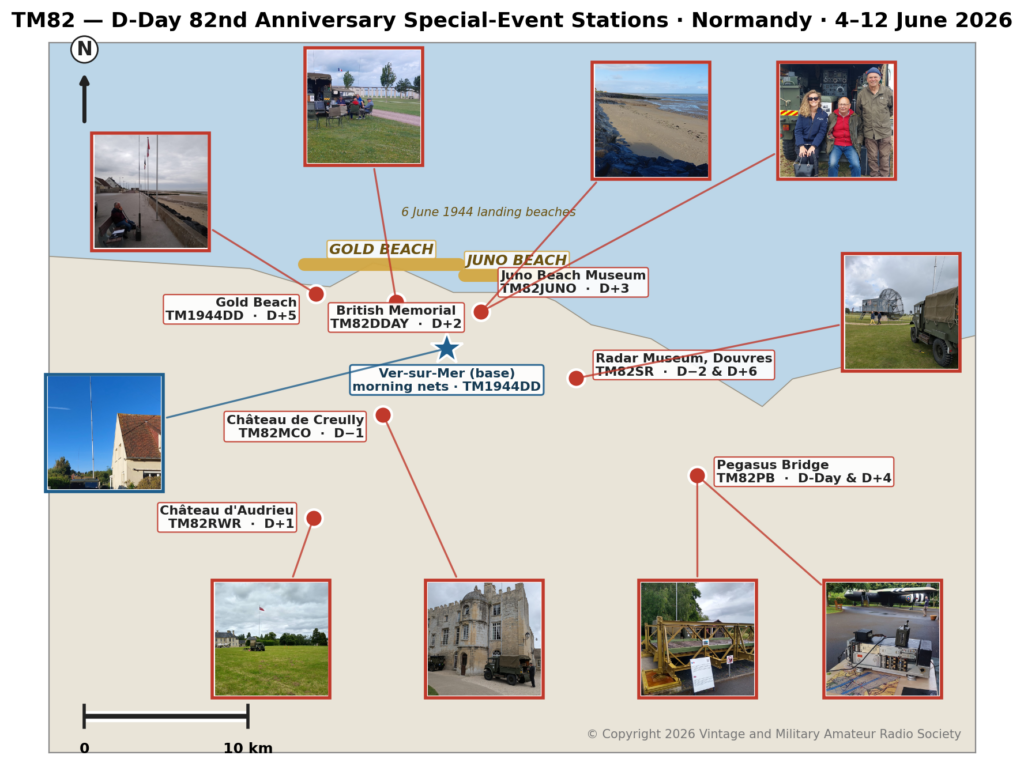
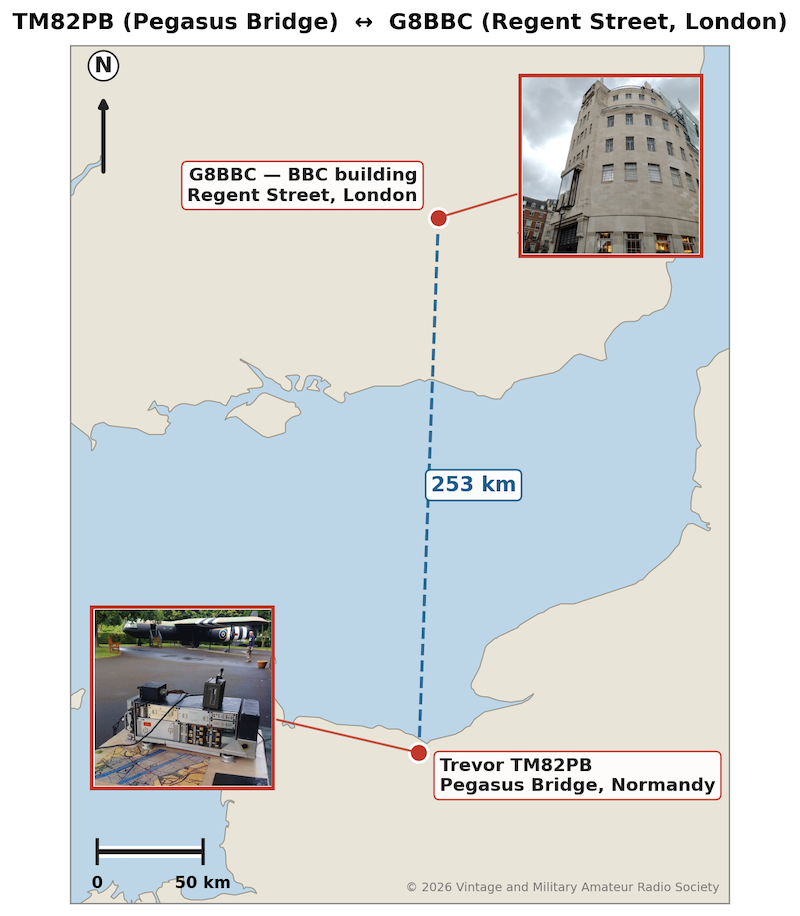
A group of VMARS members and guests went to Normandy for 9 days to commemorate D-Day 82nd anniversary 1944-2026. By operating restored vintage military radio equipment in authentic settings, D-Day activations and expeditions aim to preserve the skills, technology, and spirit of wartime communications while educating the amateur radio community and the wider public about their vital role in this pivotal moment in history. The map below shows the team itinerary in Normandy, France.
Itinerary
9 days · 7 activation sites · D-Day = Sat 6 Jun 2026
★ Base station (morning nets): Ver-sur-Mer · TM1944DD
| Day | Location | Callsign | From prev. |
|---|---|---|---|
| D−2 Thu 4 | Radar Museum, Douvres | TM82SR | — |
| D−1 Fri 5 | Château de Creully | TM82MCO | 12 km |
| D-Day Sat 6 | Pegasus Bridge | TM82PB | 20 km |
| D+1 Sun 7 | Château d’Audrieu | TM82RWR | 24 km |
| D+2 Mon 8 | British Memorial | TM82DDAY | 14 km |
| D+3 Tue 9 | Juno Beach Museum | TM82JUNO | 5 km |
| D+4 Wed 10 | Pegasus Bridge | TM82PB | 17 km |
| D+5 Thu 11 | Gold Beach | TM1944DD | 26 km |
| D+6 Fri 12 | Radar Museum, Douvres | TM82SR | 17 km |
Itinerary Map
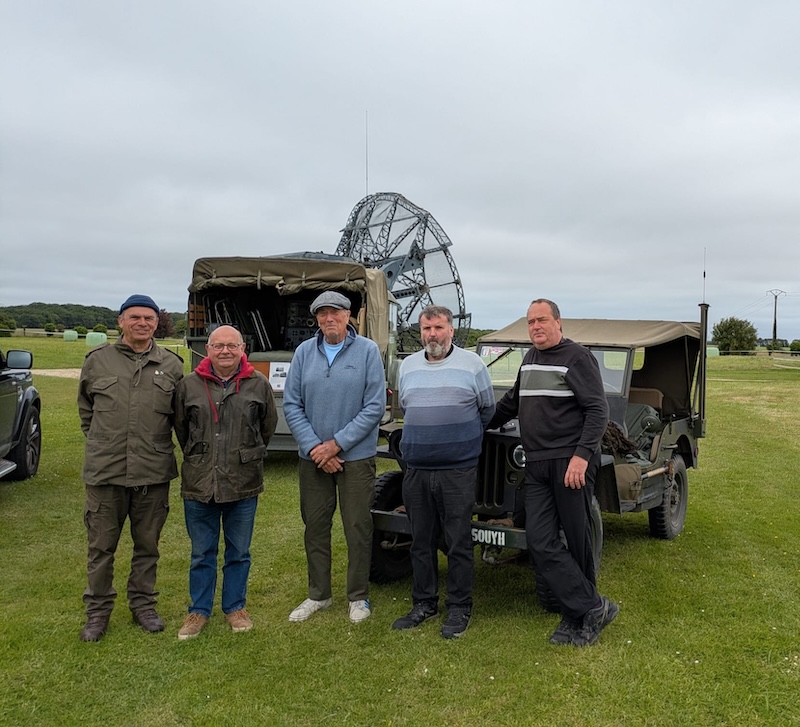
The Expedition Team
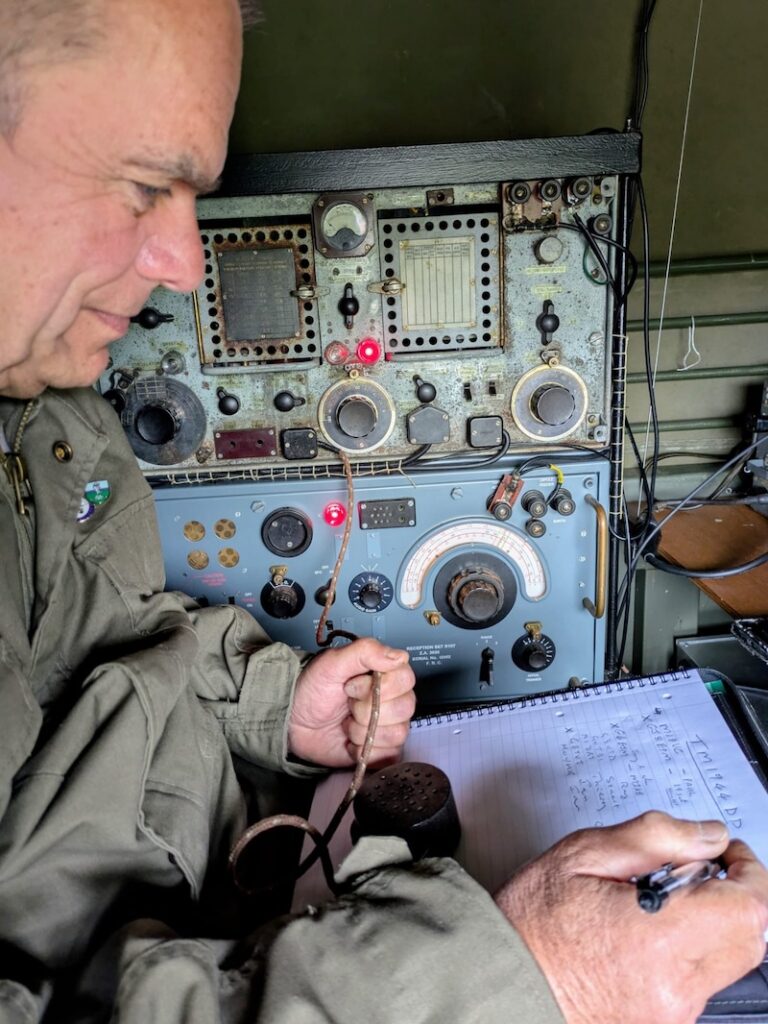
The team comprised: Martin, M0MGA; Tony, G3YYH; Douglas (Smurf’s Dad); Rich, M0XRB; Andrew (Smurf), M0URF; and Trevor, PA3BOH.
Site History
Radar Museum, Douvres — TM82SR (D−2 & D+6)
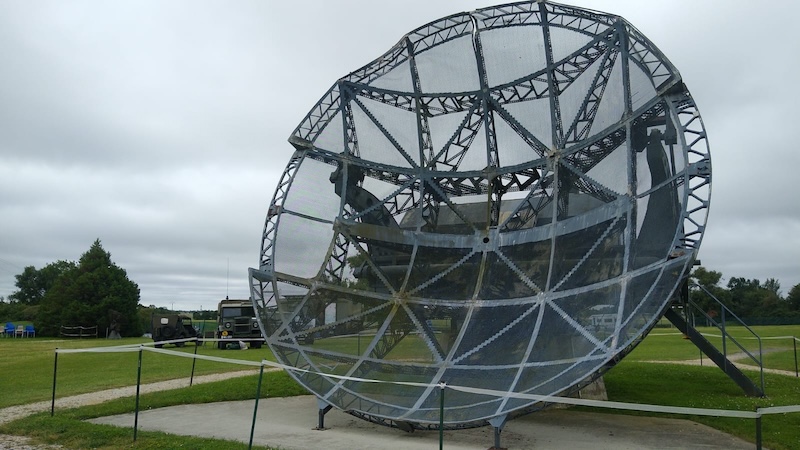
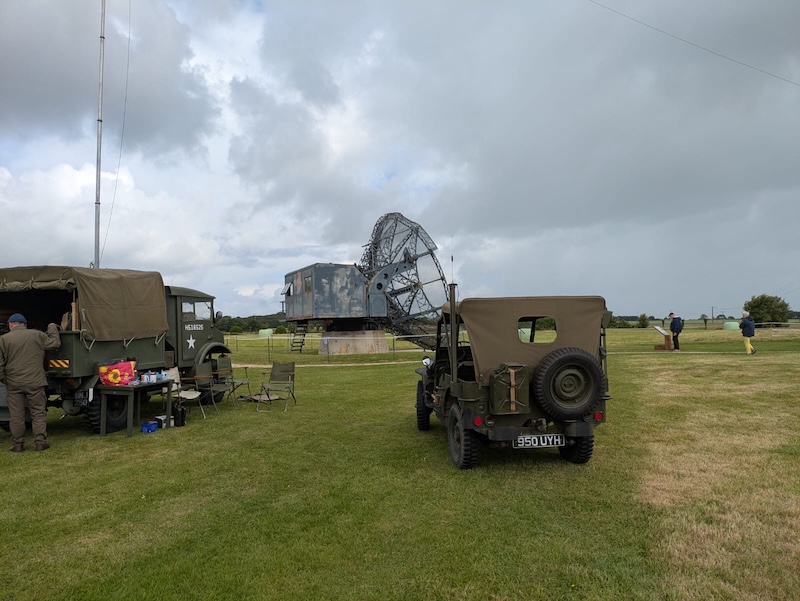
The Douvres-la-Délivrande radar station is one of the most intact German radar installations surviving from the Atlantic Wall. Operated by Luftwaffe signals personnel, it housed a complex of Freya and Würzburg radar sets within a heavily fortified bunker compound — one of the largest such sites in Normandy. Allied forces bypassed it on D-Day itself, and it held out until 17 June 1944, making it one of the last German positions in the area to fall. Today the site is preserved as a museum, with the bunkers, aerials, and equipment in remarkable condition. For our activation, TM82SR was on the air on both D−2 and D+6, bookending the main commemorative period.
Château de Creully — TM82MCO (D−1)
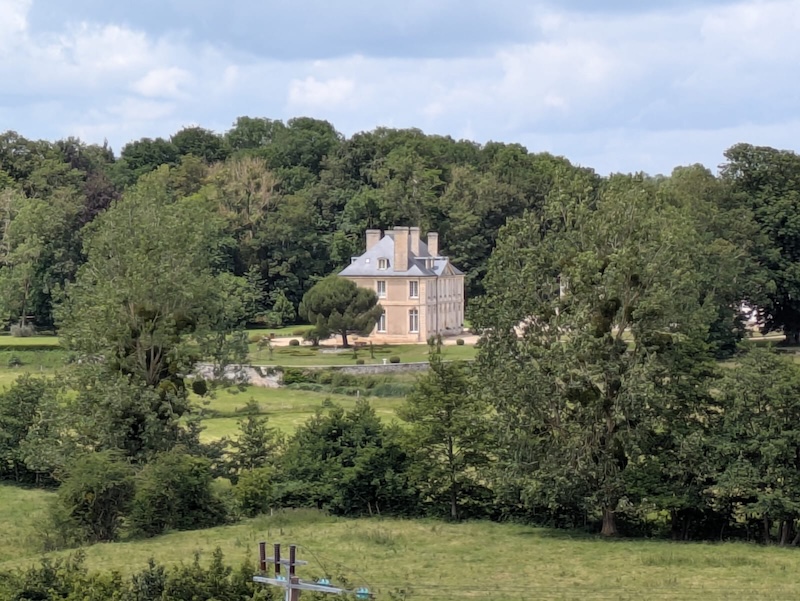
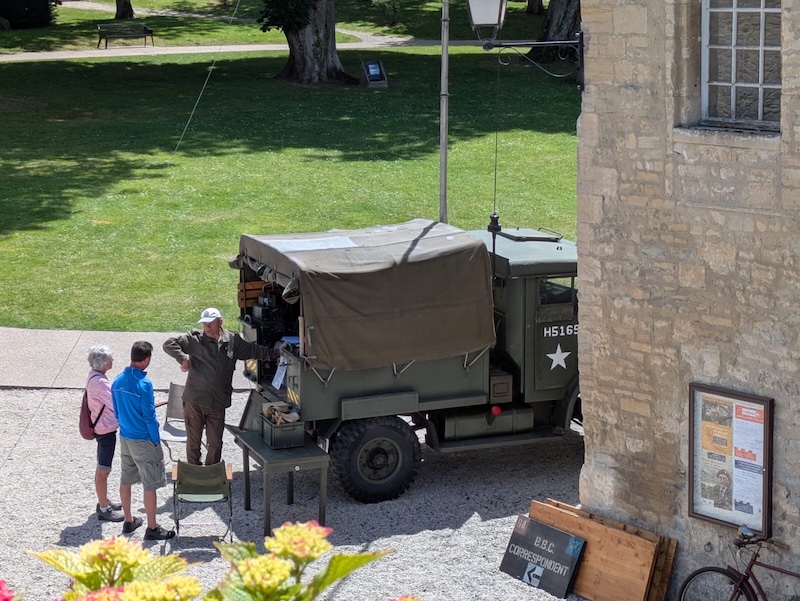
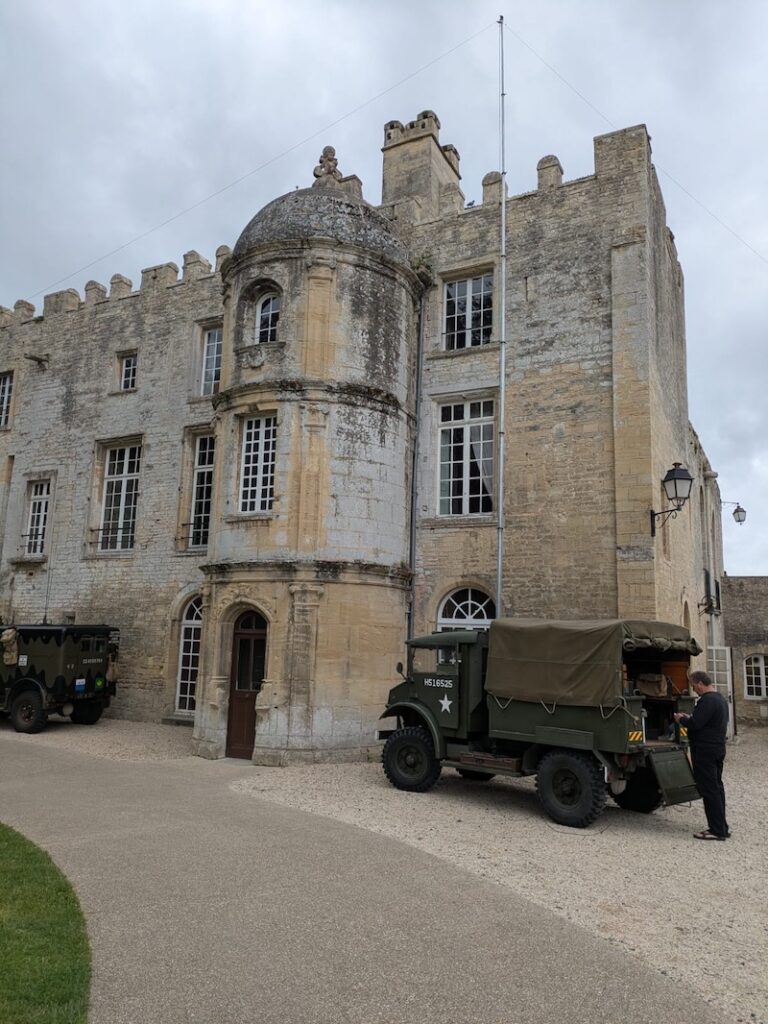
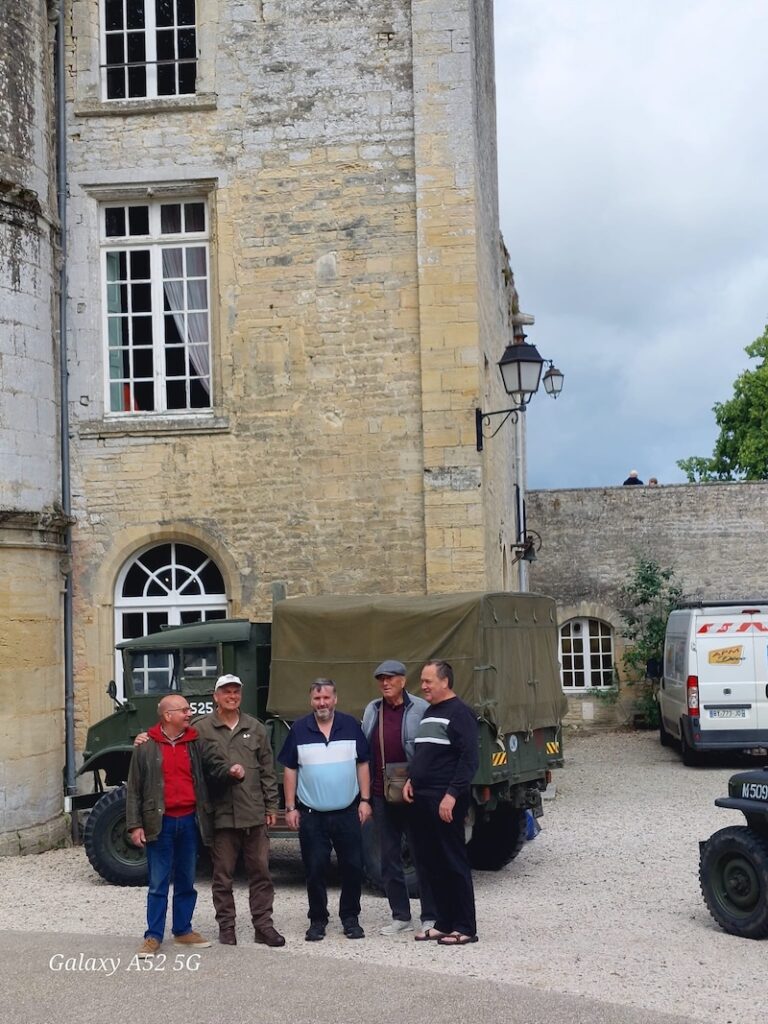
The Château de Creully, a medieval fortress above the village of Creully-sur-Seulles, served as the forward headquarters of Field Marshal Bernard Montgomery during the early days of the Normandy campaign. From June 1944, the BBC installed a transmitter in the château’s keep, broadcasting the first reports of the liberation directly from liberated French soil — a landmark moment in wartime broadcasting. The château flew the Union Flag and hosted senior Allied commanders throughout June and July 1944. Our activation TM82MCO operated from this historic location on D−1, the eve of the main commemorative dates, with the BBC callsign MCO.
Further reading
- Creully – Normandy Battlefield Tours — a useful ground-level orientation of the village and surrounding area as it appears today.
- General Montgomery’s tactical HQ at Château de Creullet — Europe Remembers entry covering Monty’s forward HQ at the nearby Château de Creullet, a companion site to Creully itself.
- Montgomery press interview at Creully, 11 June 1944 (YouTube / DDay-Overlord) — filmed press conference given by Montgomery at Creully five days after the landings, a rare piece of contemporary footage from the HQ itself.
- General Montgomery arrives in the Normandy beachhead on D+1(IWM Film Collection) — footage of Montgomery arriving and departing by jeep for 21st Army Group HQ at Creully. © Imperial War Museum; all rights reserved — see the IWM copyright policy before reproducing or reusing.
- HM King George VI visits the Normandy beachhead, 16 June 1944(IWM Collections) — film record of the King’s visit to Creully, where he presented medals and met senior commanders. © Imperial War Museum; same copyright terms apply.
- Reporting War 1944/45 — Action (ORBEM) — the source behind our TM82MCO callsign choice: Mike Charlie Oboe was the designator used in BBC wartime broadcasting operations. This page also documents the church service at Creully arranged by war correspondent Frank Gillard, one of the first broadcast religious services from liberated France.
- BBC Year Book 1945 (World Radio History, PDF) — the BBC’s own annual review covering the corporation’s wartime broadcasting operations, including the Normandy period. A rich primary source with considerable detail on field broadcasting, correspondents, and technical operations.
Pegasus Bridge — TM82PB (D-Day & D+4)
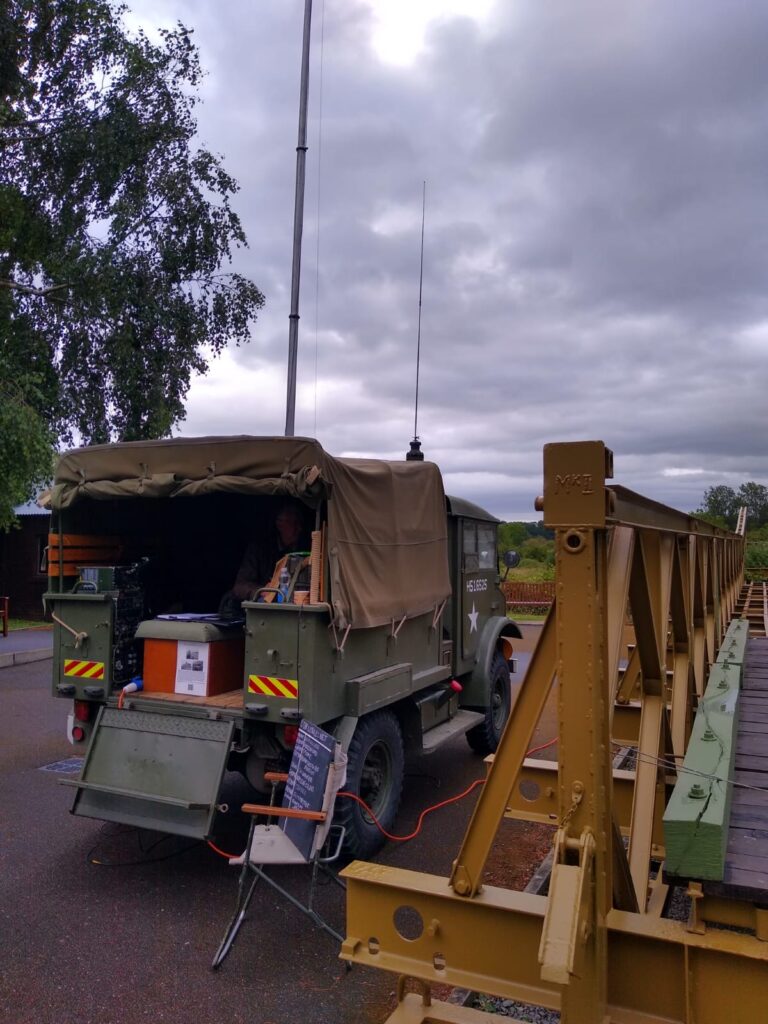
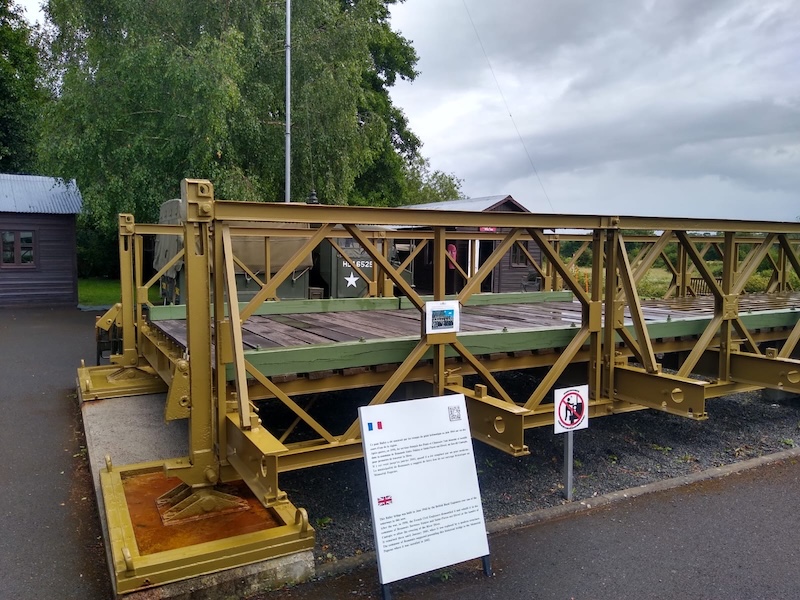
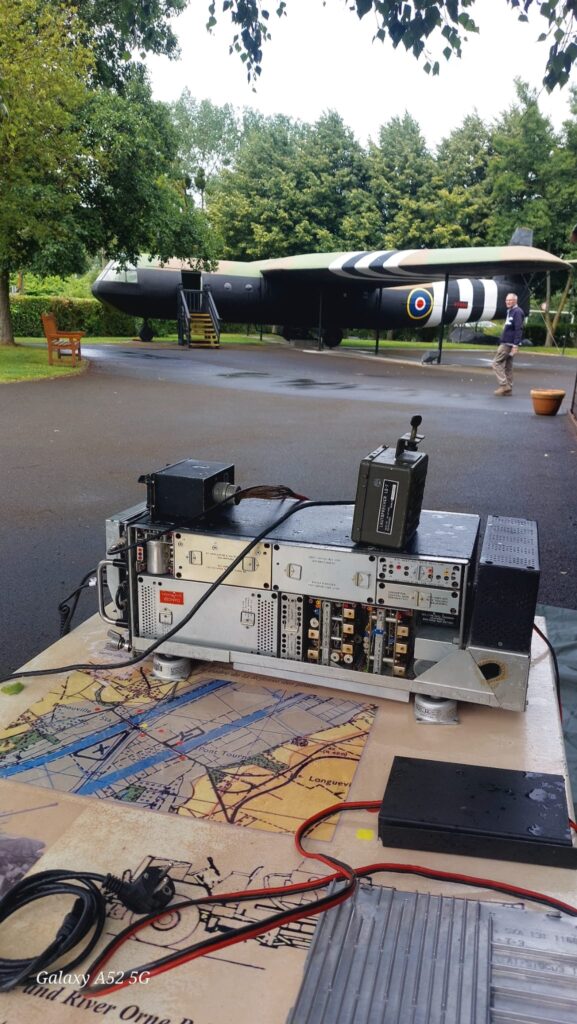
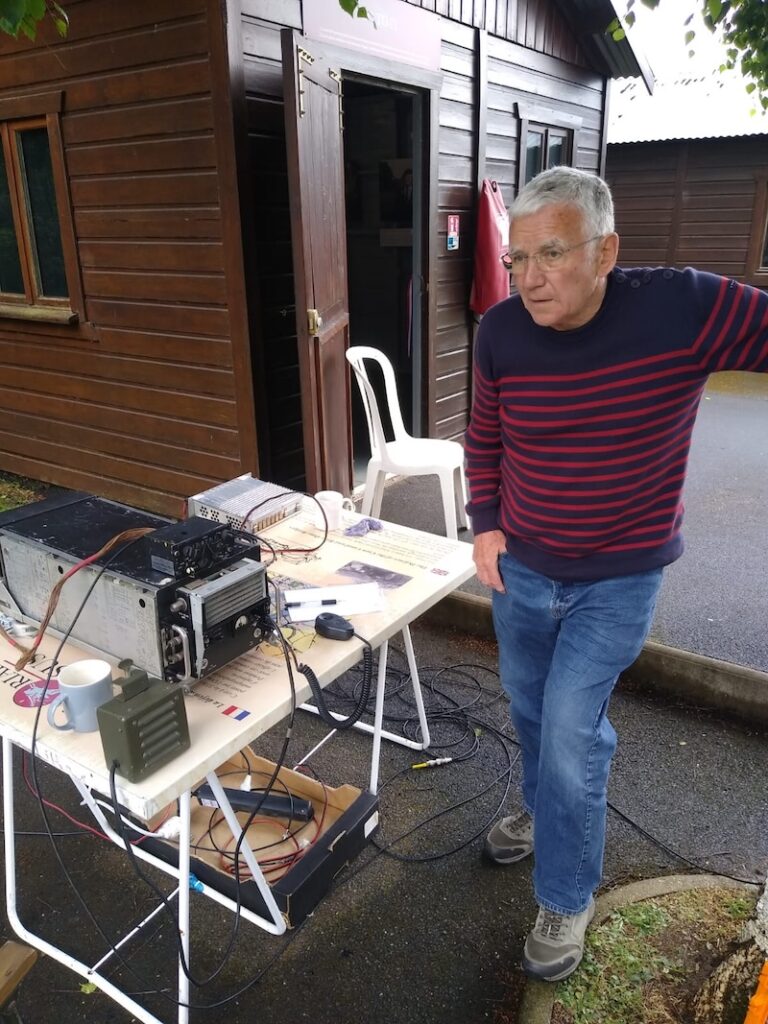
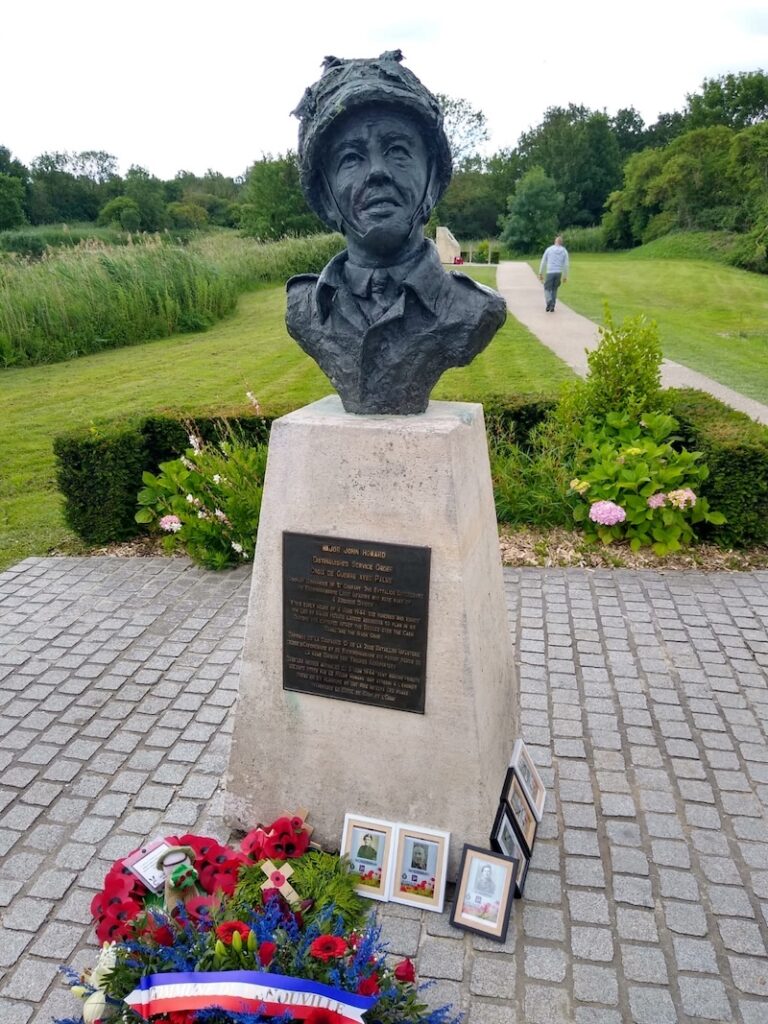
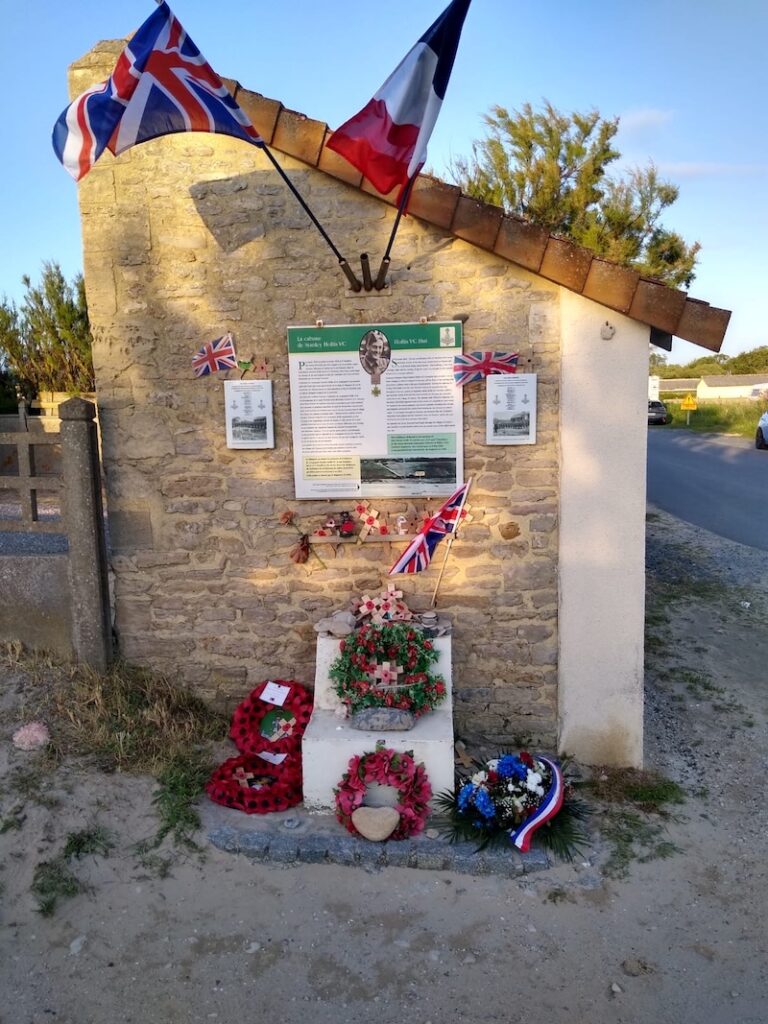
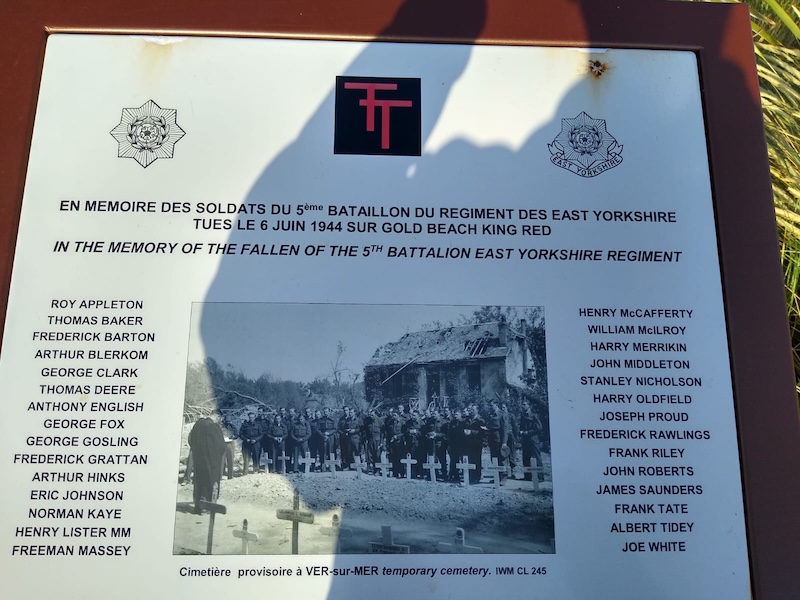
Pegasus Bridge — officially the Bénouville bridge over the Caen Canal — was the objective of the famous glider assault by men of the Oxfordshire and Buckinghamshire Light Infantry in the opening minutes of 6 June 1944. The coup-de-main operation, led by Major John Howard, secured the bridge intact in what was arguably the first Allied land action of D-Day. The original bridge is now preserved at the adjacent Mémorial Pegasus museum; a replica stands in its place. TM82PB will be active on D-Day itself and again on D+4, honouring both the assault and the subsequent consolidation of the bridgehead.
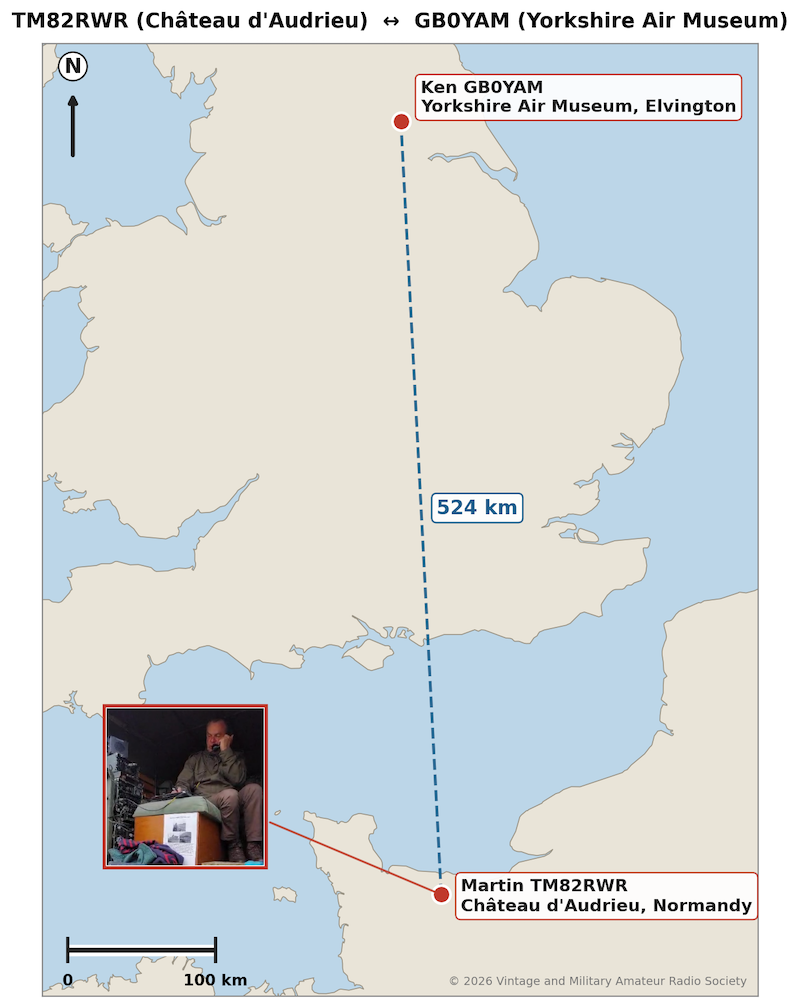
Château d’Audrieu — TM82RWR (D+1)
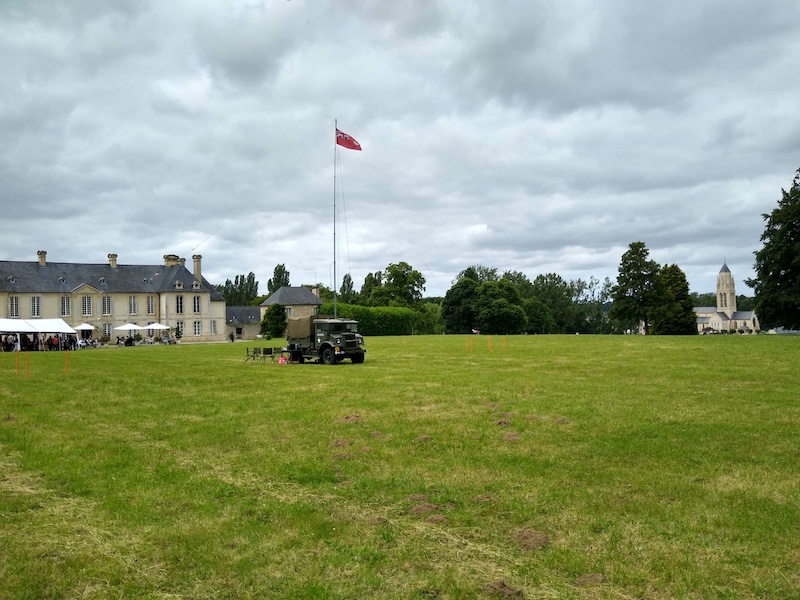
The Château d’Audrieu, an elegant eighteenth-century country house south of Bayeux, carries a dark place in the history of the Normandy campaign. On 8 June 1944 — D+2 — soldiers of the 12th SS Panzer Division Hitlerjugend murdered 27 Canadian prisoners of war in the grounds of the château, one of several war crimes committed by that formation in the days following the landings. The château itself survived the battle and stands today as a hotel, but the grounds remain a place of solemn memory. TM82RWR was activated from this location on D+1 as part of our commemorative programme.
British Memorial — TM82DDAY (D+2)
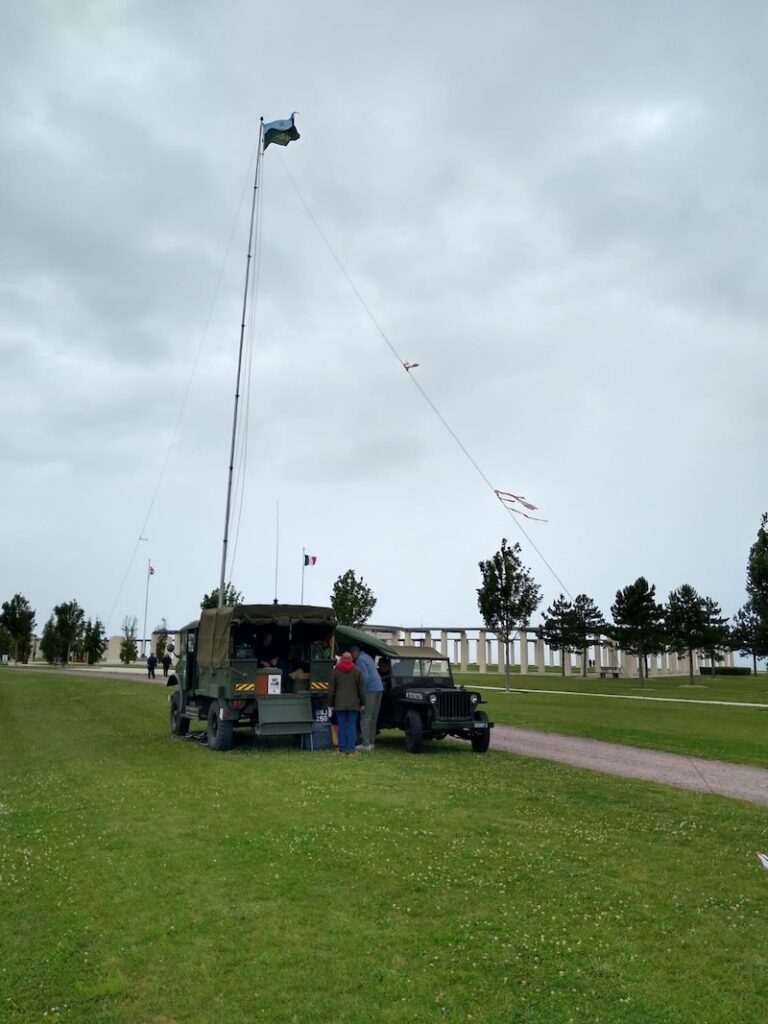
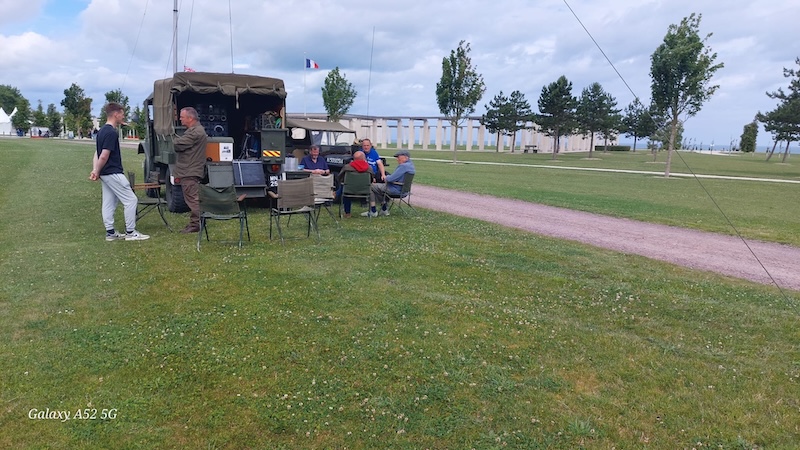
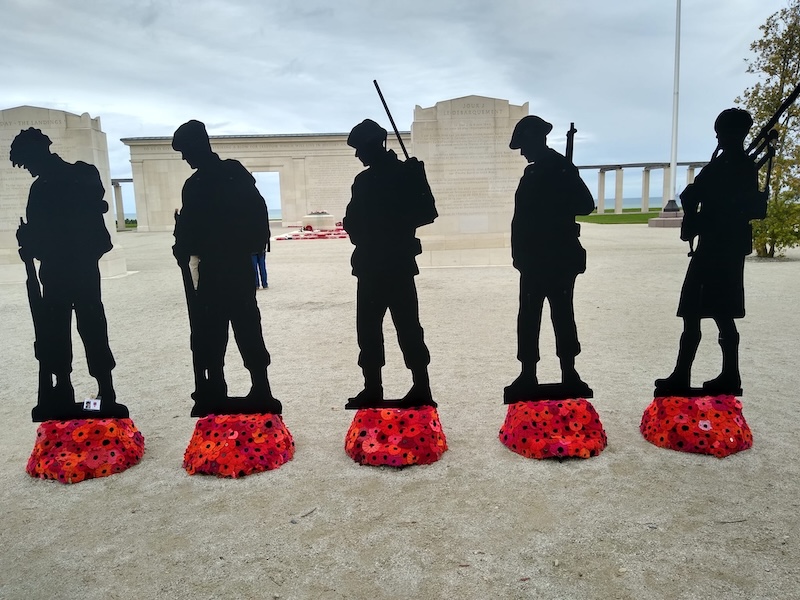
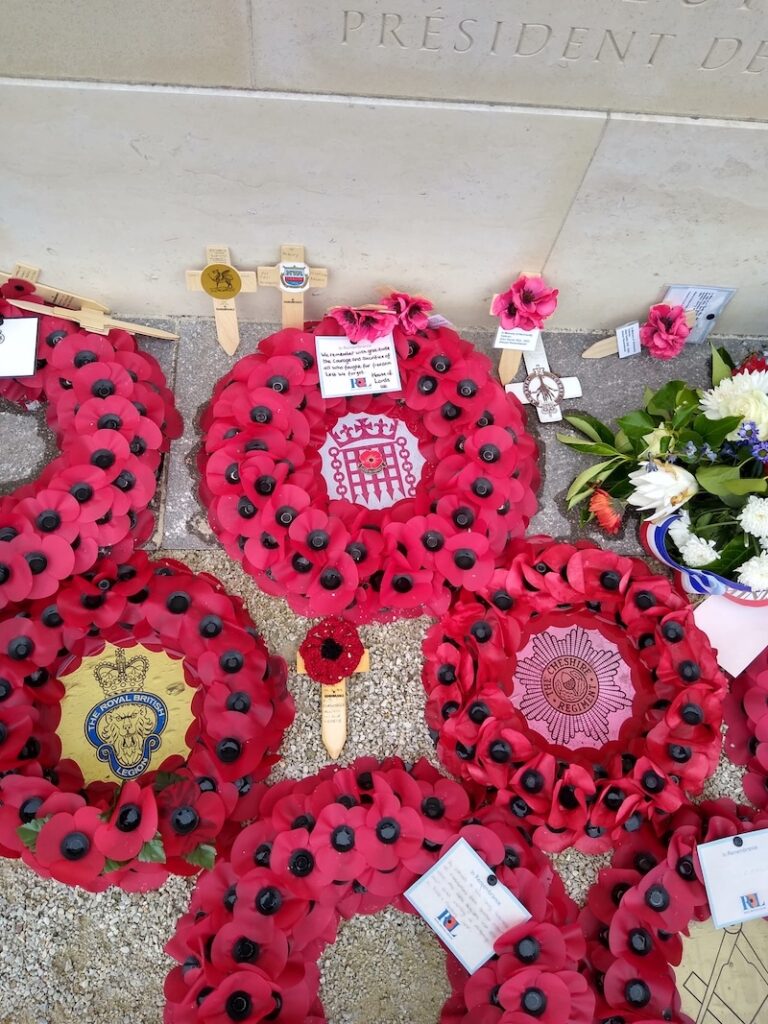
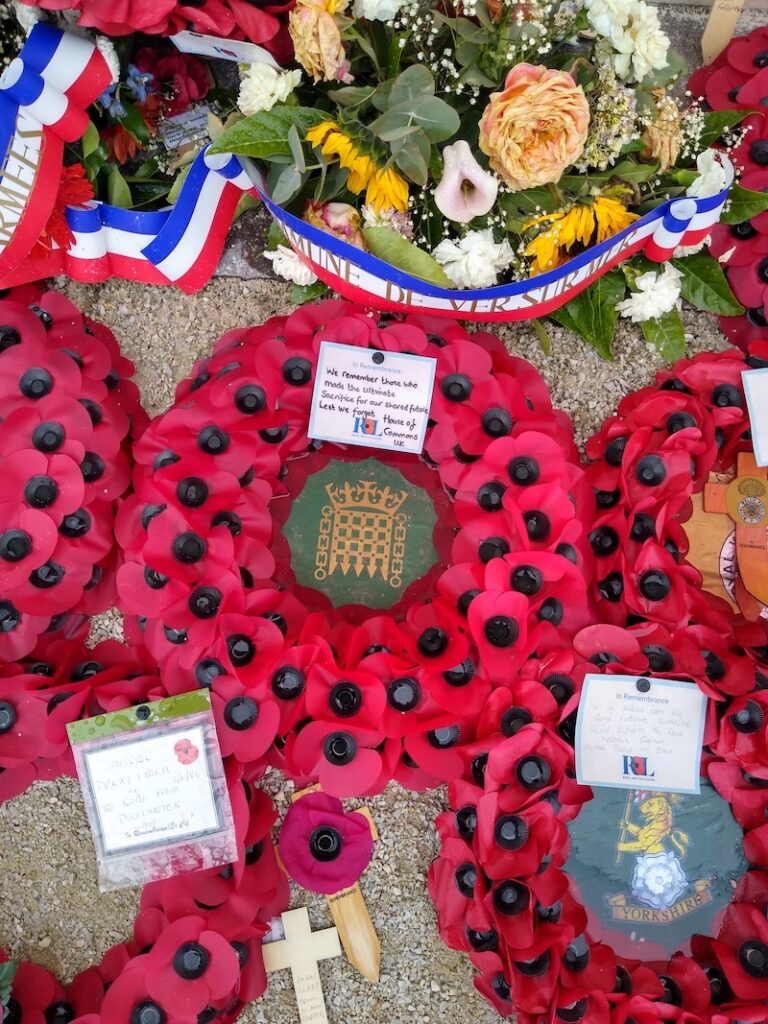
The British Normandy Memorial at Ver-sur-Mer, inaugurated in 2021, stands on high ground overlooking Gold Beach and commemorates the 22,442 British service personnel who died during Operation Overlord. Designed by Liam O’Connor, the memorial takes the form of a classical colonnaded structure bearing the names of the fallen arranged by formation and unit — the largest British memorial to be built in over 50 years. The site commands sweeping views across the bay where British forces came ashore on 6 June 1944. TM82DDAY was on the air from this location on D+2 as part of our commemorative activations.
Juno Beach Museum — TM82JUNO (D+3)
The Juno Beach Centre at Courseulles-sur-Mer is Canada’s national memorial and museum on the Normandy coast, opened in 2003. It tells the story of Canada’s contribution to the Second World War and specifically to the D-Day landings, during which approximately 14,000 Canadian troops came ashore on Juno Beach — suffering nearly 1,000 casualties on the first day alone. The museum sits directly behind the beach where the Regina Rifle Regiment and other units fought their way inland against fierce resistance. Original fortifications remain on the beach. TM82JUNO was activated from this location on D+3.
Commemoration or Celebration? D-Day on Both Sides of the Channel
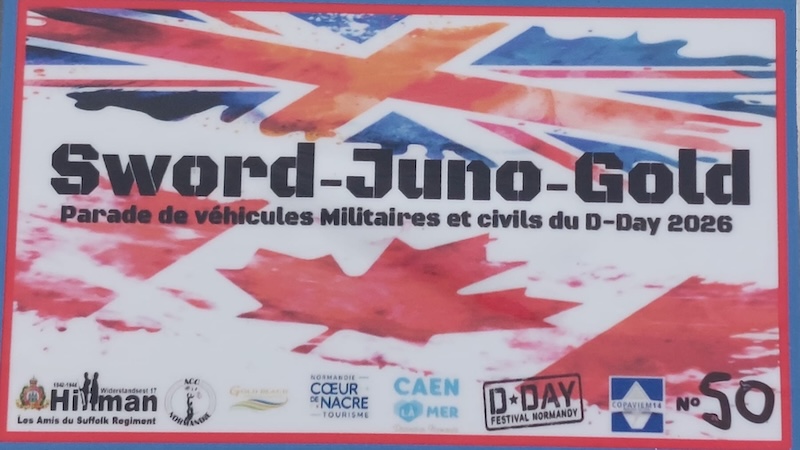
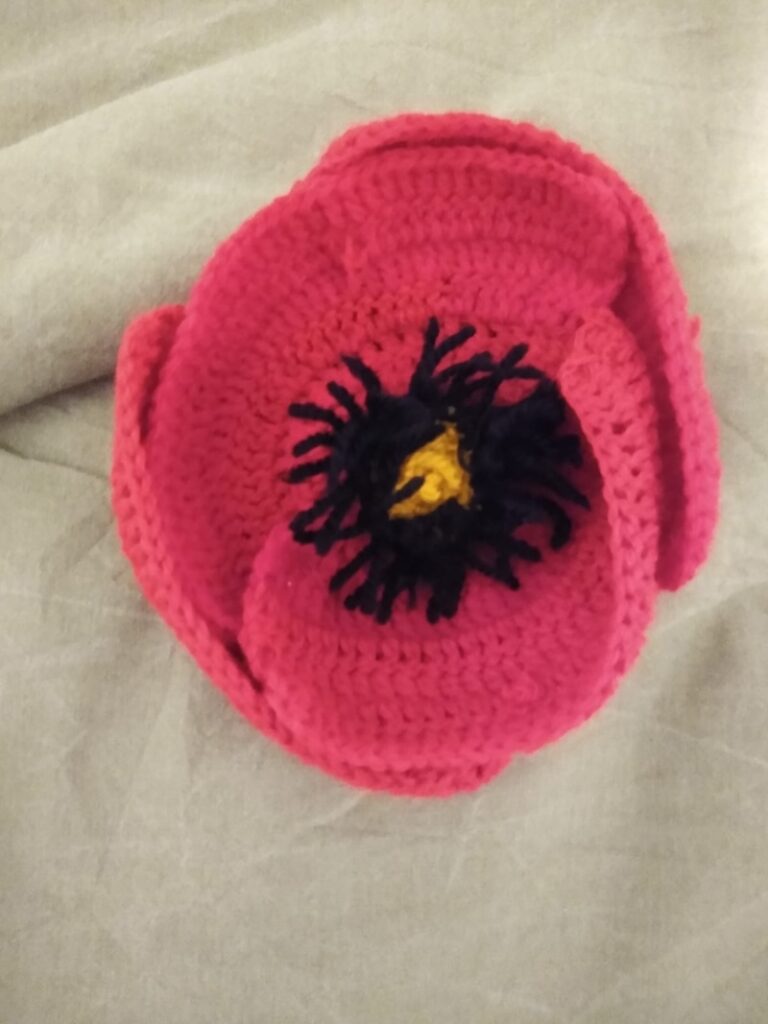
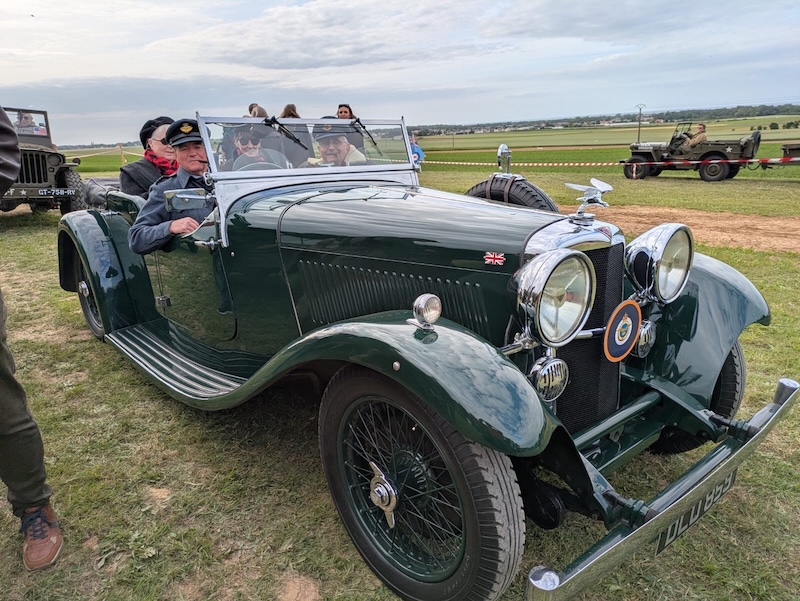
One of the more striking impressions from operating in Normandy for the 82nd anniversary was the difference in how the two sides of the Channel mark the day. In the United Kingdom, D-Day is approached very much as an act of commemoration — a solemn remembrance of sacrifice, centred on the fallen, with wreaths, services and quiet reflection. In Normandy the mood is noticeably different: alongside the same deep respect for the veterans, there is an unmistakable spirit of celebration. For the towns and villages liberated in the summer of 1944, the anniversary is also a thanksgiving for freedom restored — streets lined with flags, vintage military vehicles, period dress, music and gatherings that draw whole communities together. What stood out most was that every generation took part, from toddlers to great-grandmothers, with schools closing for the occasion so that the whole community, young and old alike, could share in the day. Neither approach is more heartfelt than the other; rather, they reflect two perspectives on the same event — for Britain, a day of mourning and honour for those who did not return, and for France, a joyful gratitude for the day liberation began.
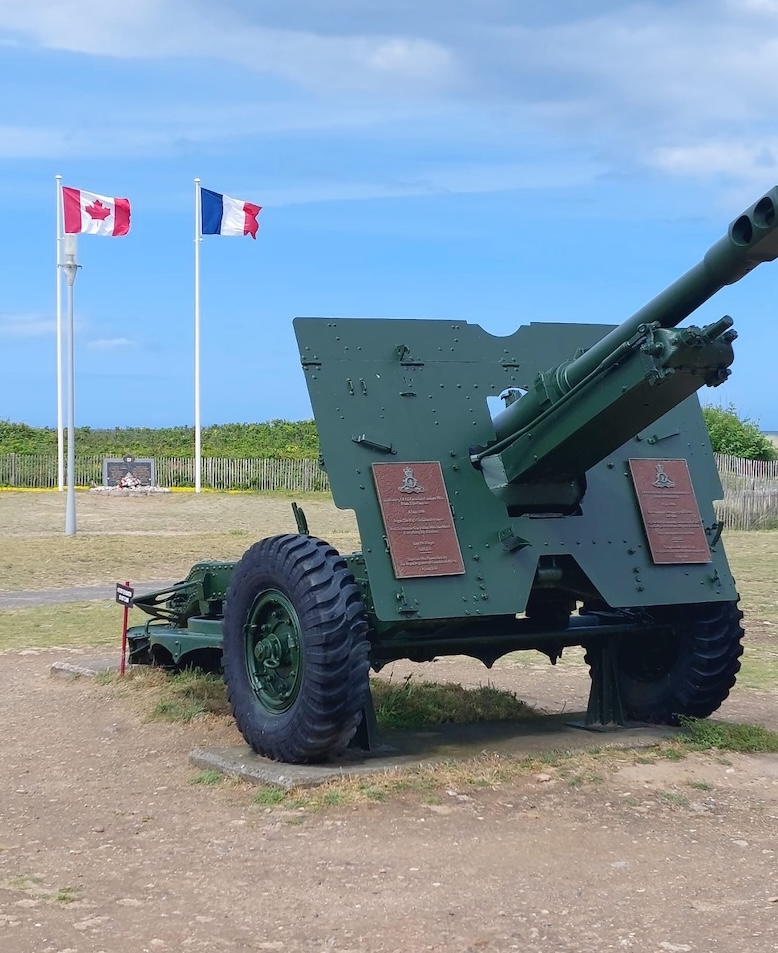
Gold Beach — TM1944DD (D+5)
Gold Beach, stretching roughly from Ver-sur-Mer to Arromanches, was the central British landing sector on 6 June 1944, assaulted by the 50th (Northumbrian) Infantry Division. By the end of D-Day, British forces had pushed further inland than any other sector, and within days the Mulberry B artificial harbour at Arromanches was operational — supplying the Allied armies until the capture of major ports. The remains of Mulberry B are still visible offshore. TM1944DD was activated from the Gold Beach area on D+5 as part of our final days on the air.
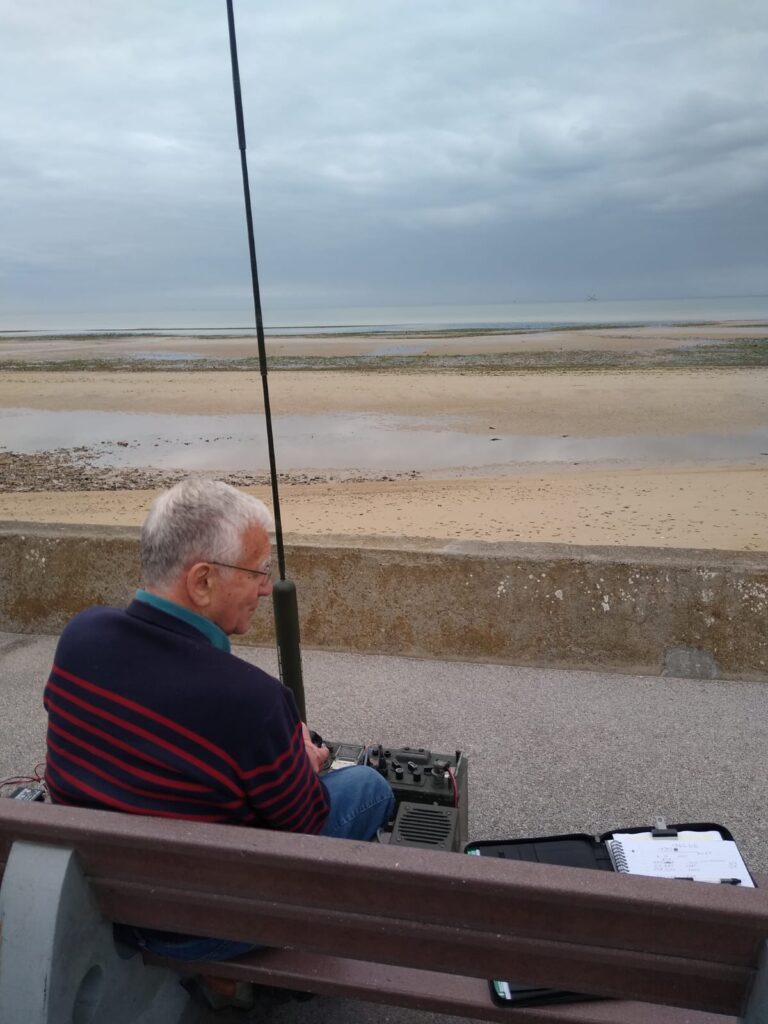
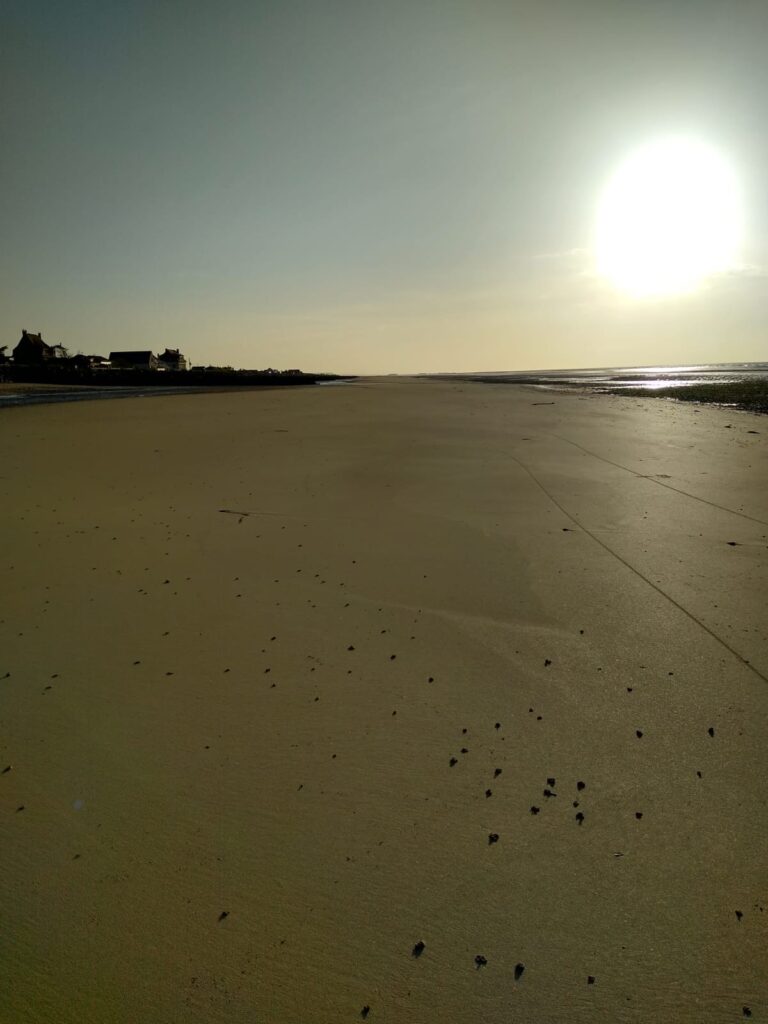
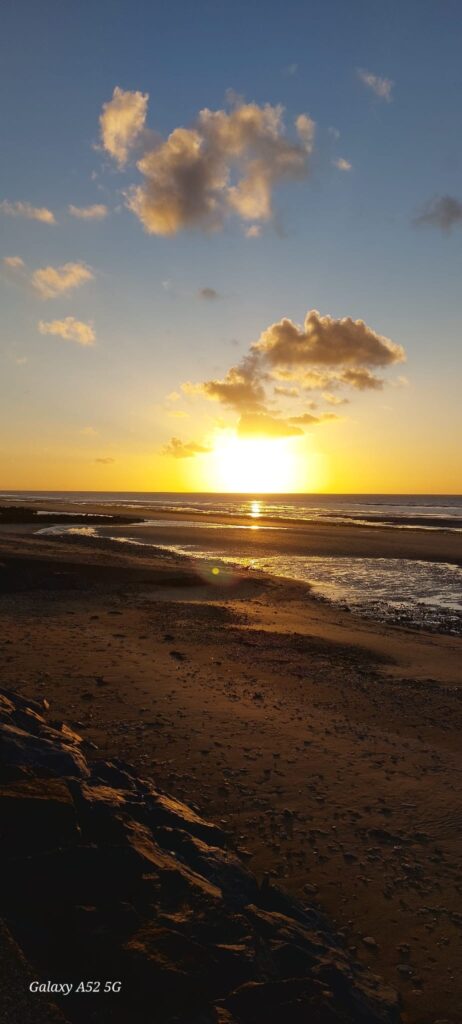
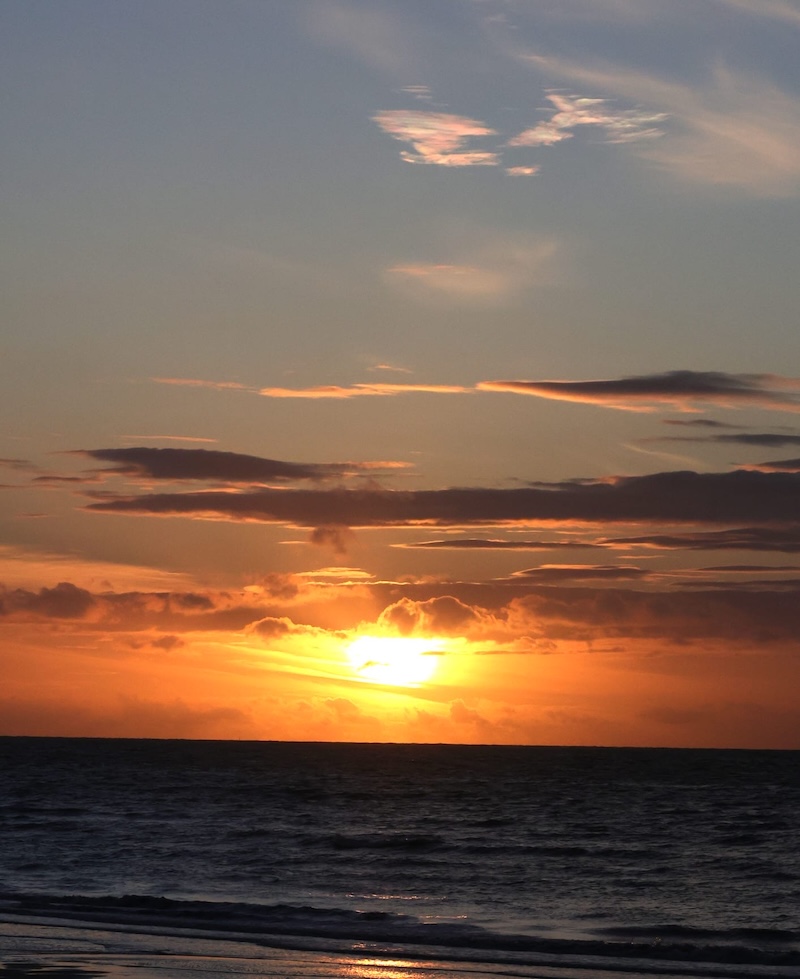
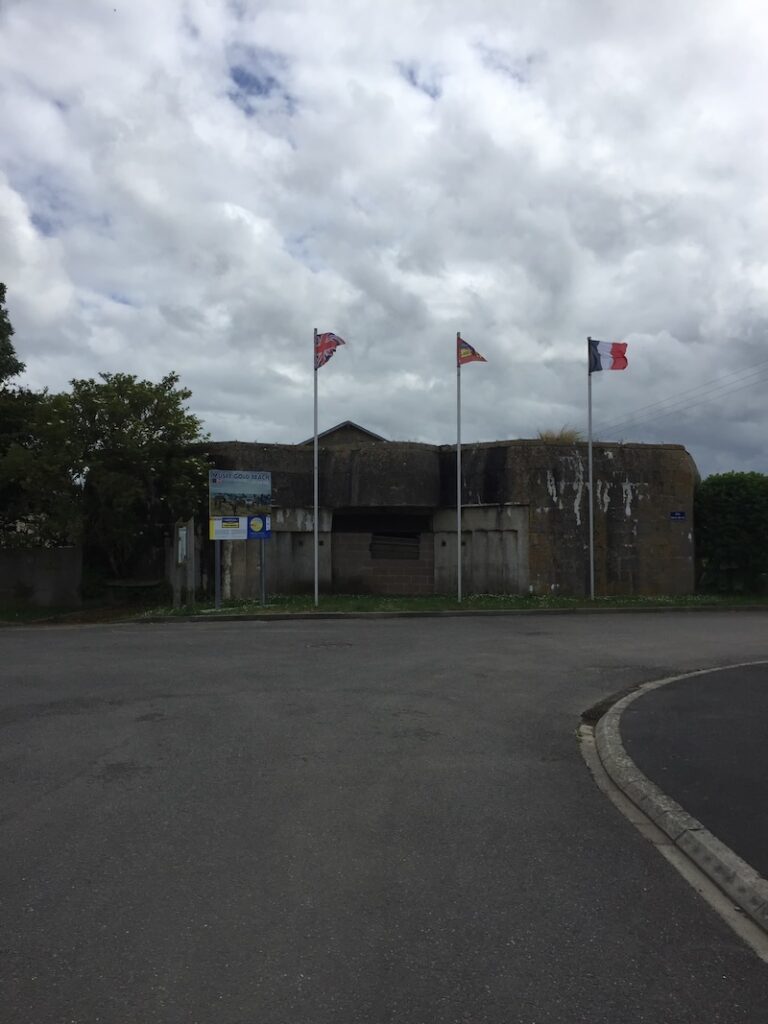
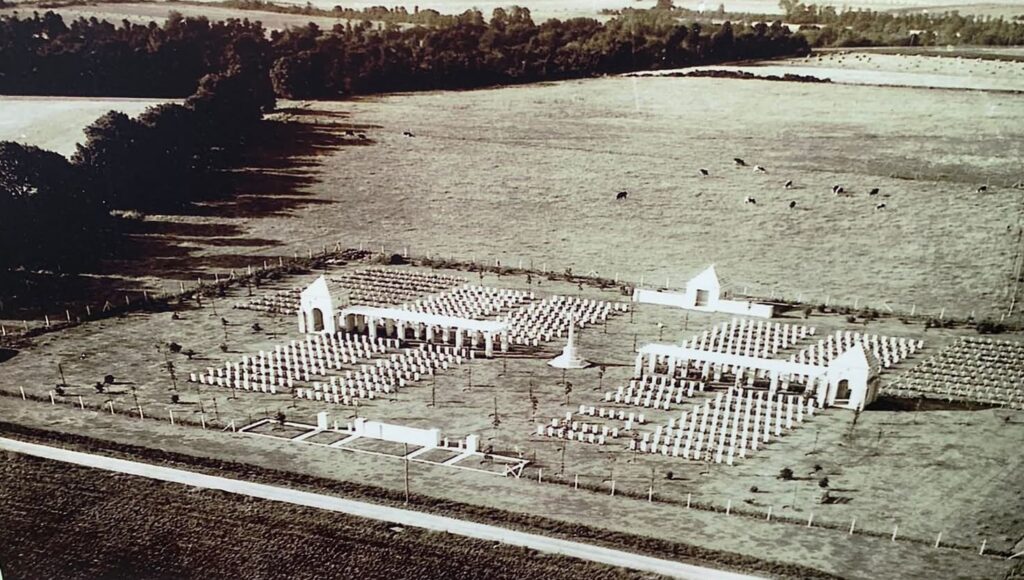
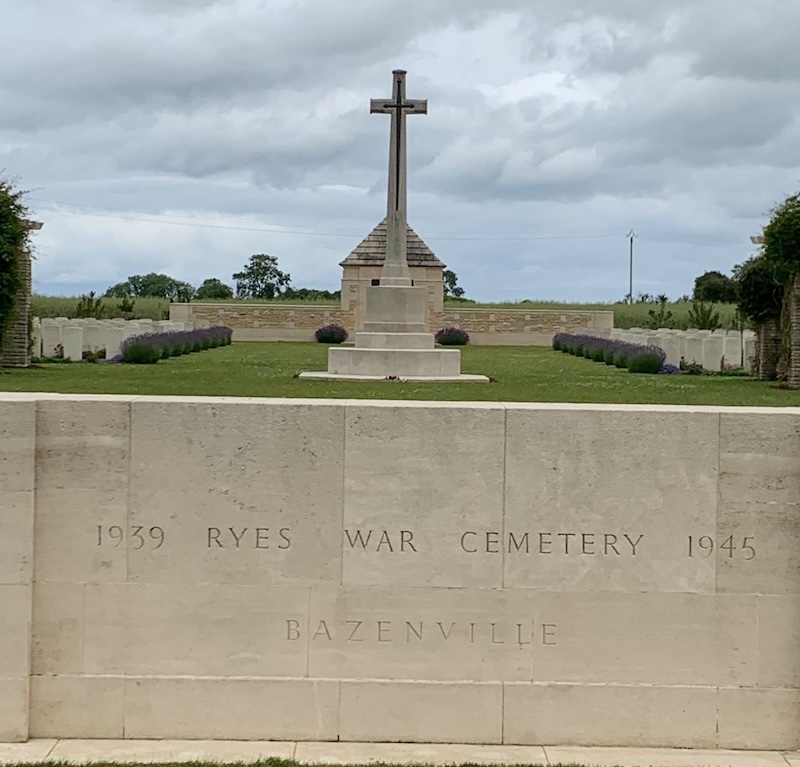
Ver-sur-Mer — Base Station, morning nets (TM1944DD ★)
Ver-sur-Mer served as our base of operations and the anchor station for all morning nets throughout the activation period. Marked on the map with a blue star under the callsign TM1944DD, the base provided logistical support, net control, and a fixed reference point for liaison between the portable activations across the commemorative sites.
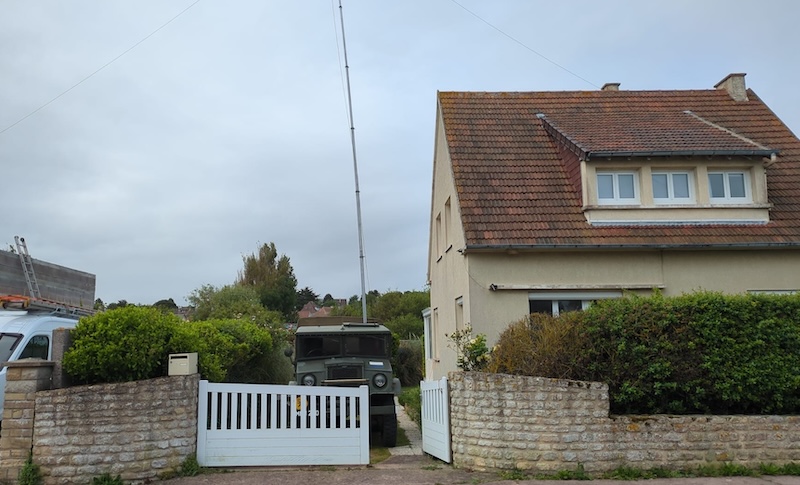
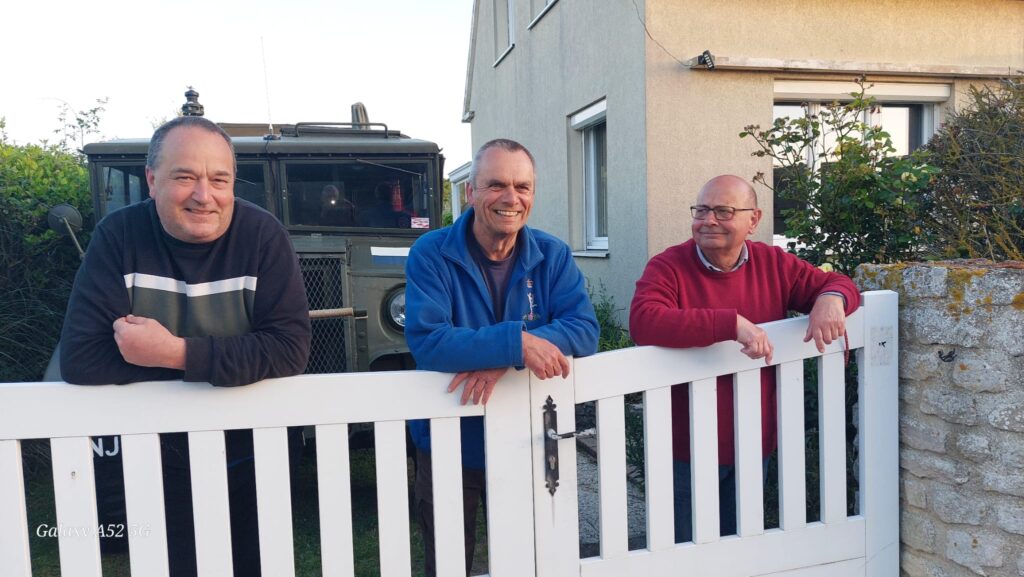
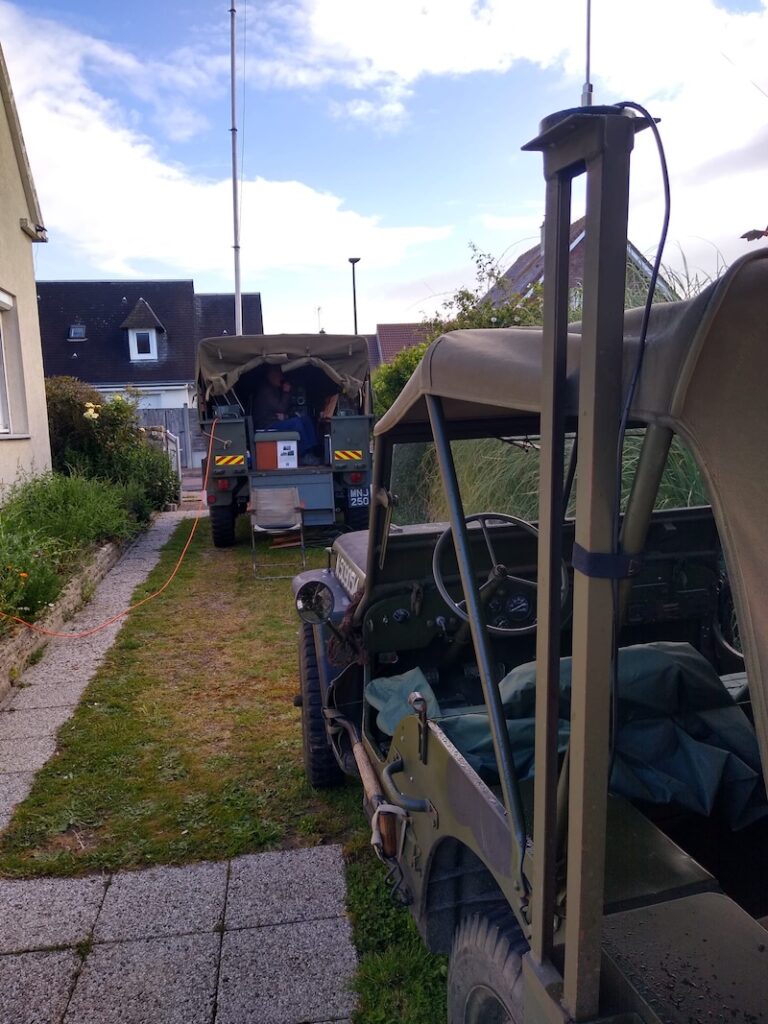
Interacting with the community
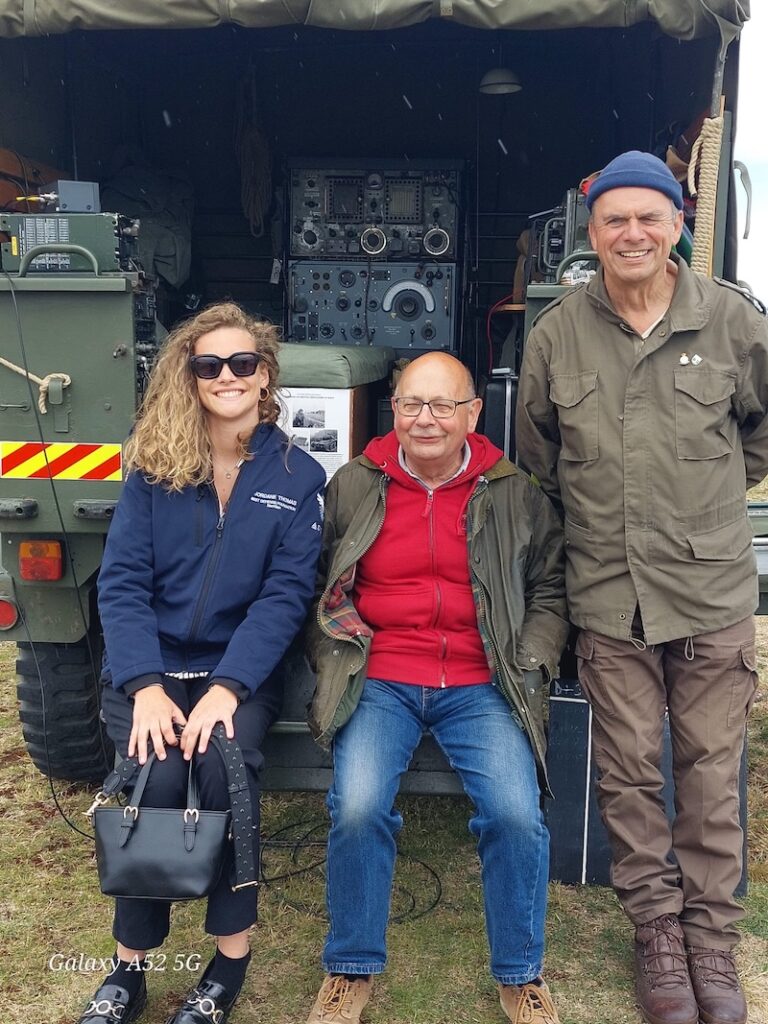
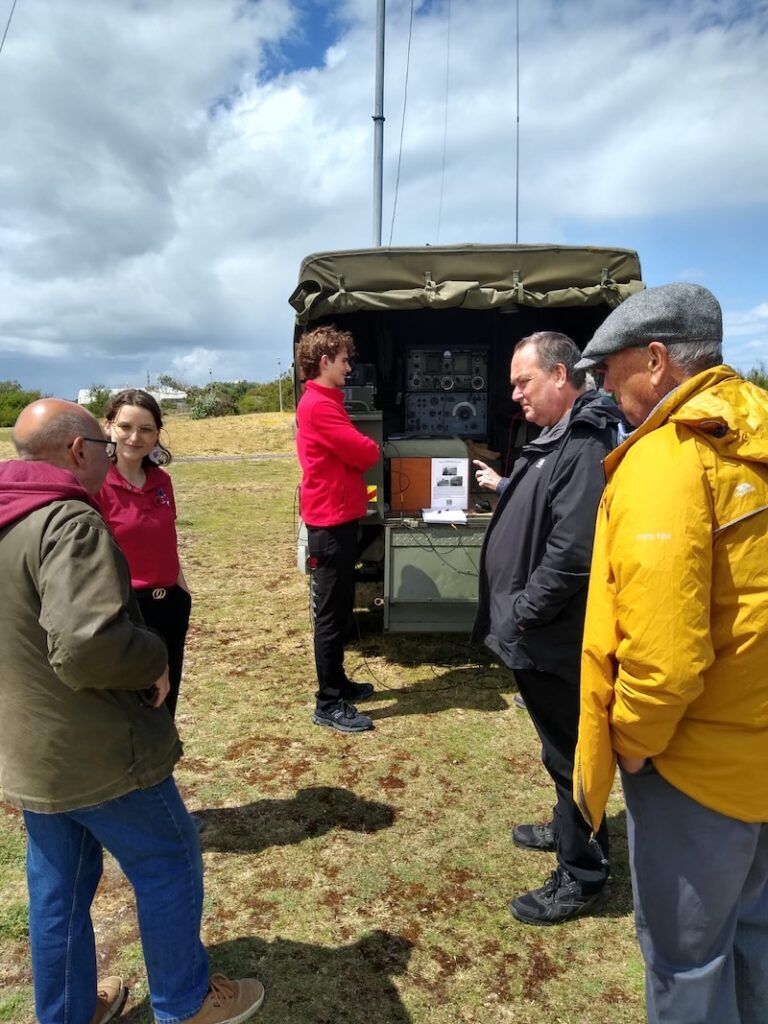
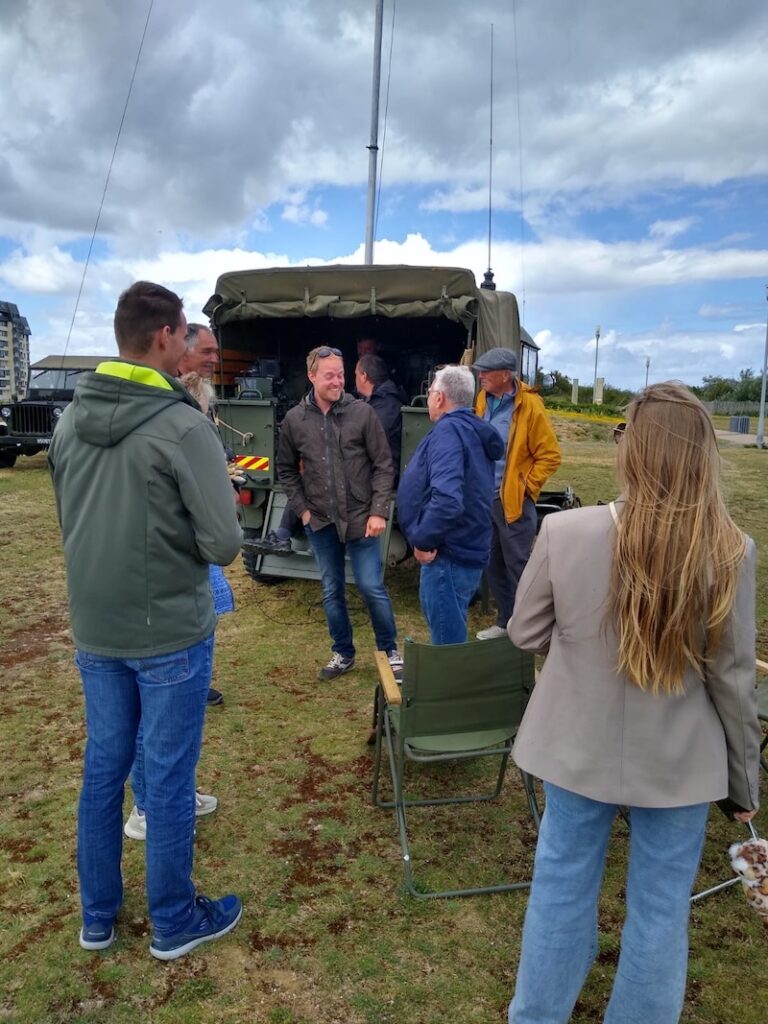
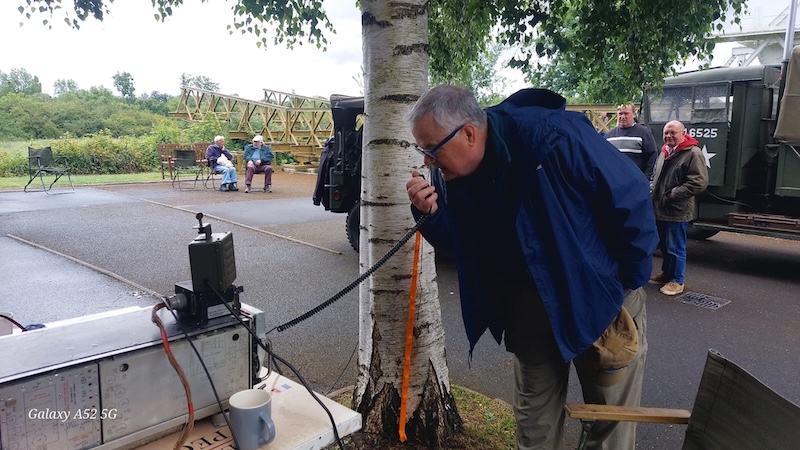
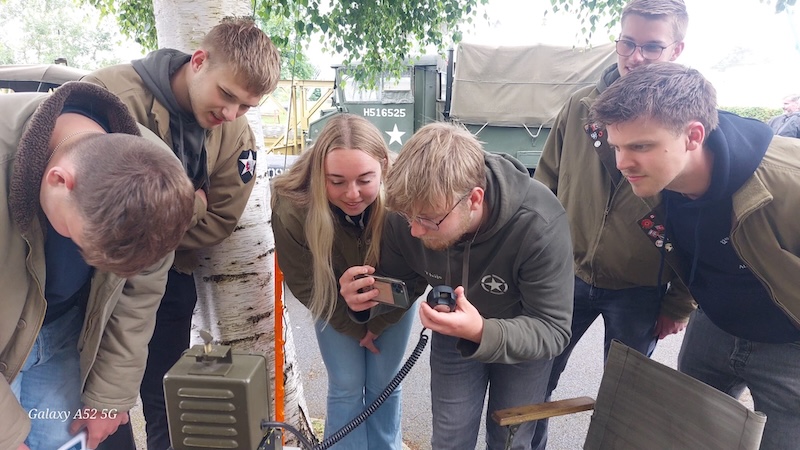
VMARS D-Day Net
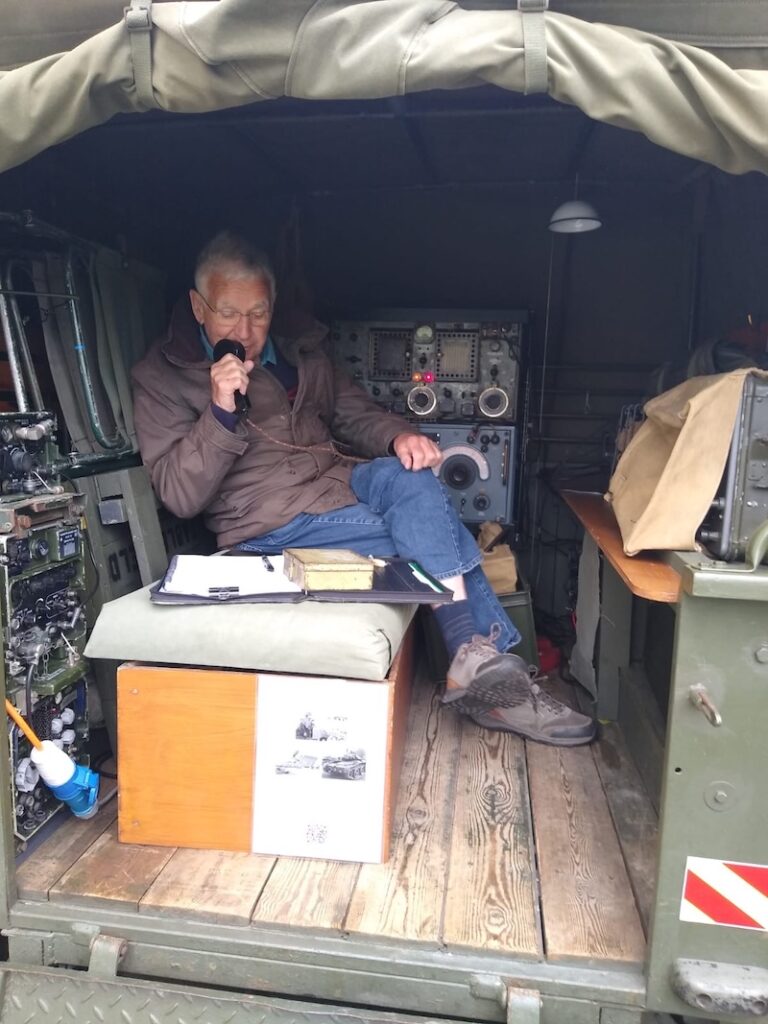
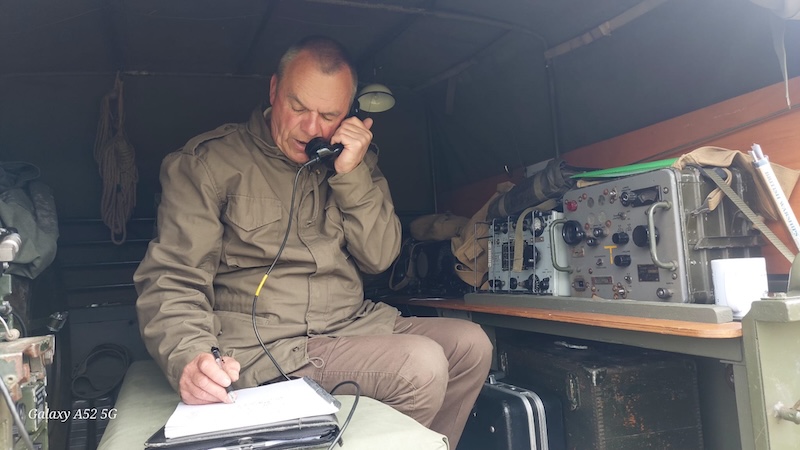
The team ran daily radio nets from the base station in Ver-sur-Mer and from each location using the French Tango Mike (“TM”) special event station call-sign prefix. The morning Nets were on 80m starting at 6am UK time using the VMARS frequency, 3615 kHz AM. The Net at mid day was on 40m using 7073 kHz LSB. There were a few evening Nets on 80m. VMARS members and beyond joined the 82nd anniversary commemorations.
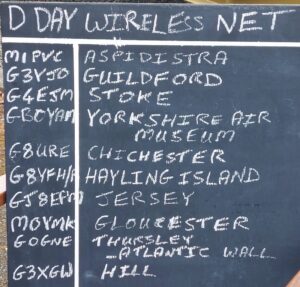
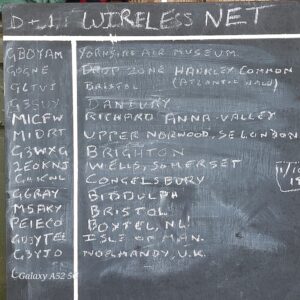
D-Day + 1, mid day Net on 40m SSB, held on 7th June 2026 February 2026 at 12pm UK time from Château d’Audrieu using special event callsign TM82RWR. The recording was captured on Jonathan Wymer’s KiwiSDR, G8URE, located in West Sussex. Conditions were good.
D-Day + 2, mid day Net on 40m SSB, held on 8th June 2026 February 2026 at 12pm UK time from the Normandy British Memorial. The recording was captured on Jonathan Wymer’s KiwiSDR, G8URE, located in West Sussex. Conditions were good.
D-Day + 4, early morning Net on 80m AM, held on 10th June 2026 February 2026 between 6:00am to 7:00am UK time and operated by Martin M0MGA, M0MGA. The recording was captured on Jonathan Wymer’s KiwiSDR, G8URE, located in West Sussex. Martin was using the Wireless Set 46 with 700 mW. Three stations were using a Collins ARC-2. One of the Collins ARC-2 was located in Normandy, France. Conditions were a bit variable on the day.
Special Wireless Equipment
Wireless Set 12
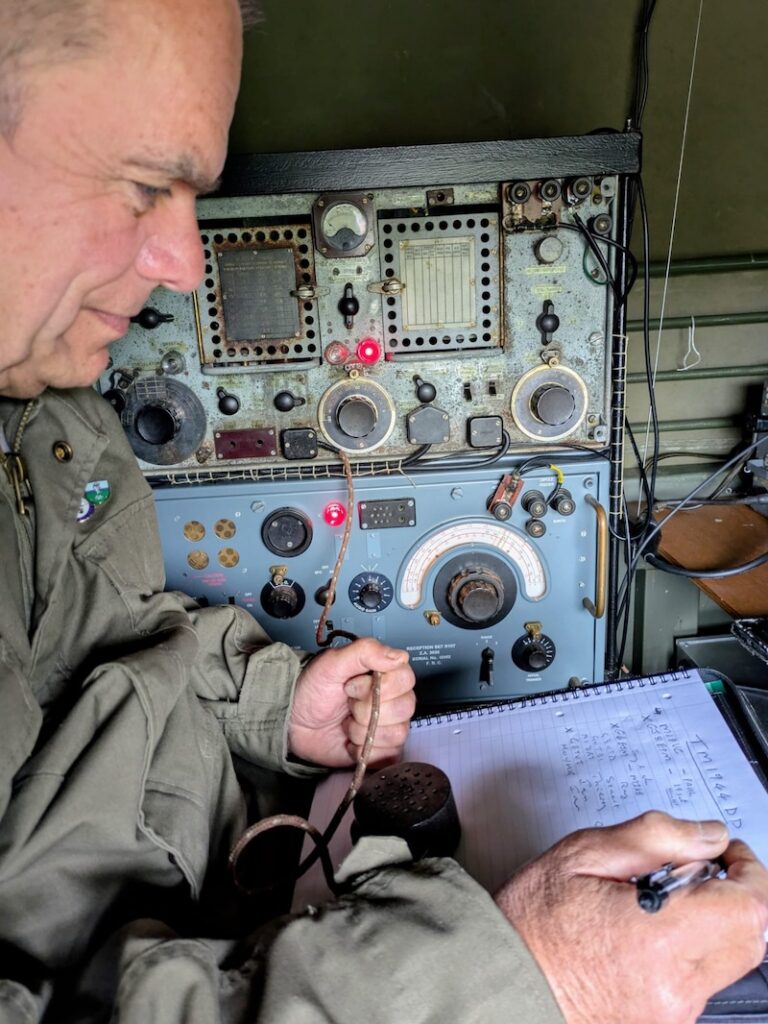
The Wireless Set No. 12 is a British Army high-frequency transmitter developed in 1940–41 and used by the Royal Signals for the longer-range links at brigade, divisional and higher formation headquarters during the Second World War. Unlike the well-known Wireless Set No. 19 fitted in tanks, the No. 12 was a ground or vehicle mounted transmitter station, normally paired with a separate communications receiver such as the R107 or the National HRO (R106). It covered 1.2–17.5 MHz across four switched bands and worked in CW, MCW and R/T (voice), putting out about 25 watts on CW and 7 watts on MCW and telephony — enough for a working range of roughly 60 miles (≈100 km) under good conditions. For links that needed more reach, a high-power version (1942) drove the No. 12 into a separate 250-watt RF amplifier cabinet. The WS12 is rugged valve (tube) design typical of British wartime signals equipment.
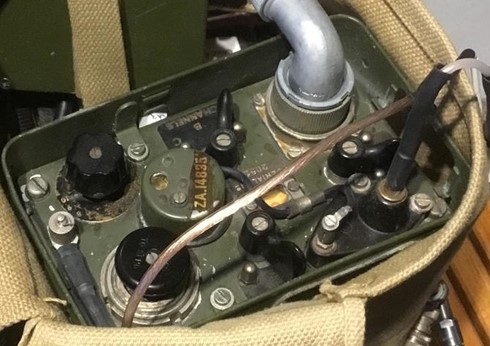
Wireless Set 46
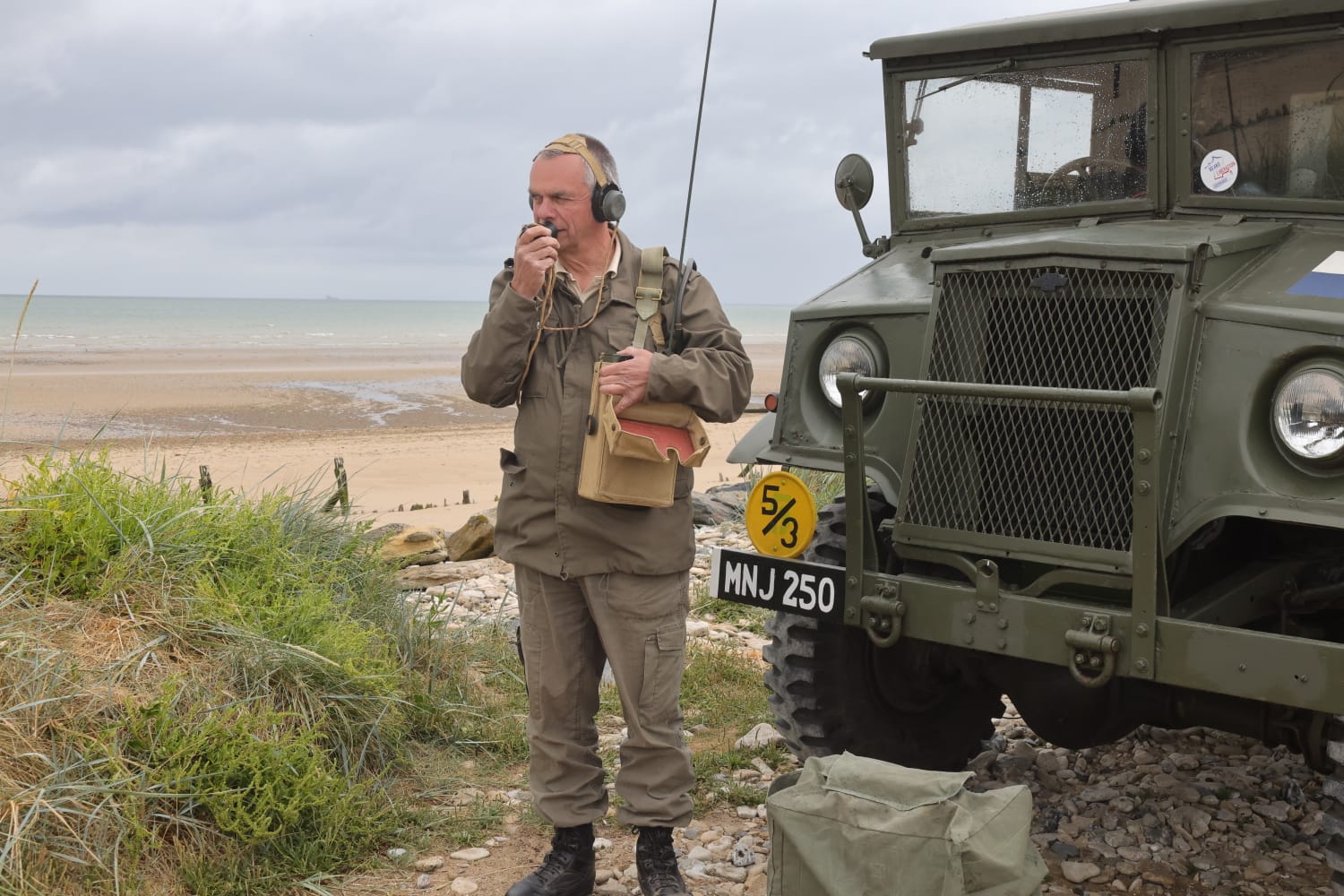
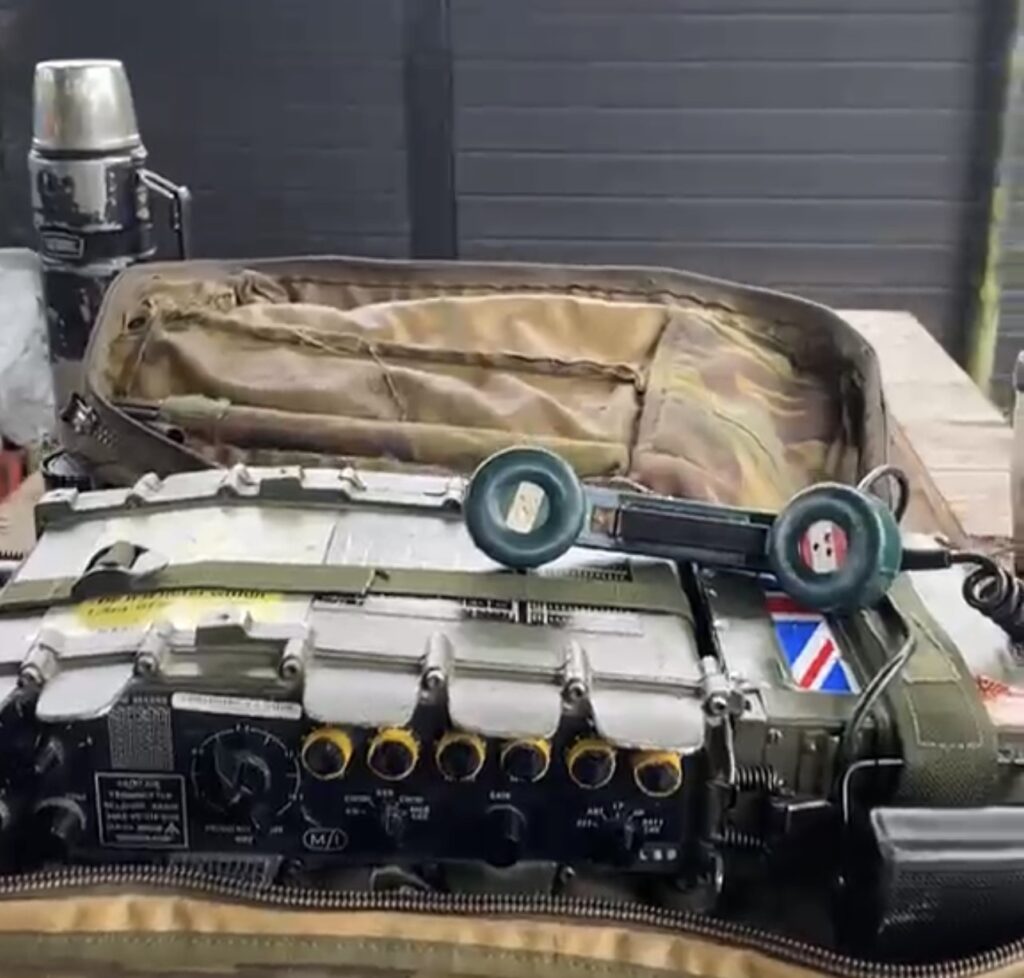
The Wireless Set No.46. is a crystal controlled man-pack built by EK Cole at their factories in Woking and Southend-on-Sea during WWII. Water resistant and used by British paratroops and by Beach Masters like Captain Colin Maud R.N. on D-Day for controlling beach landings. Three crystal controlled channels in the frequency range of 3.4 – 9.1 Mc/s and about 700mW RF output on AM and up to 1.5 watts on MCW. The set has six valves which include 2 x ARP12’s, an ARP37, an ARTP2,an AR8 and an ATP4 in the final. Power originally came from 150v and 3v batteries but VMARS users usually employ a small 6v battery inverter to supply these voltages when operating the set as a portable man-pack. It can be used with a whip aerial or with a wire aerial through a 40pf capacitor to achieve longer ranges. When conditions are right, VMARS users have frequently achieved good point to point contact between WS.No.46 sets over distances in excess of 200 miles (320Km) using wire aerials on 3615Kc/s. Probably the best British man-pack of WWII.
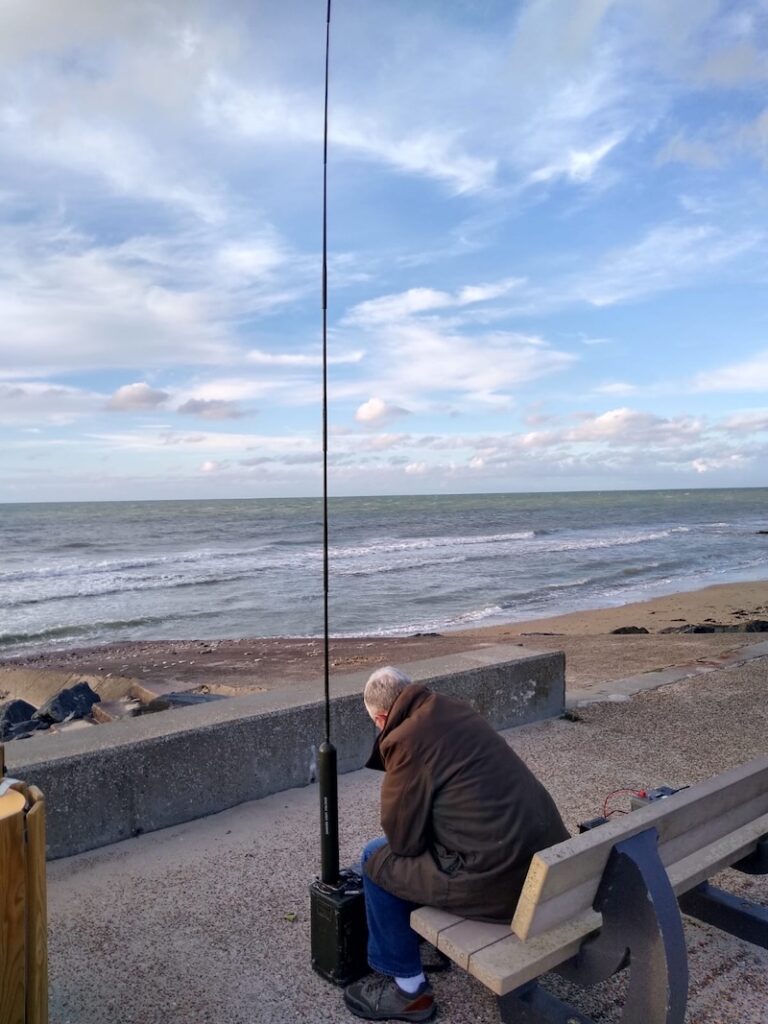
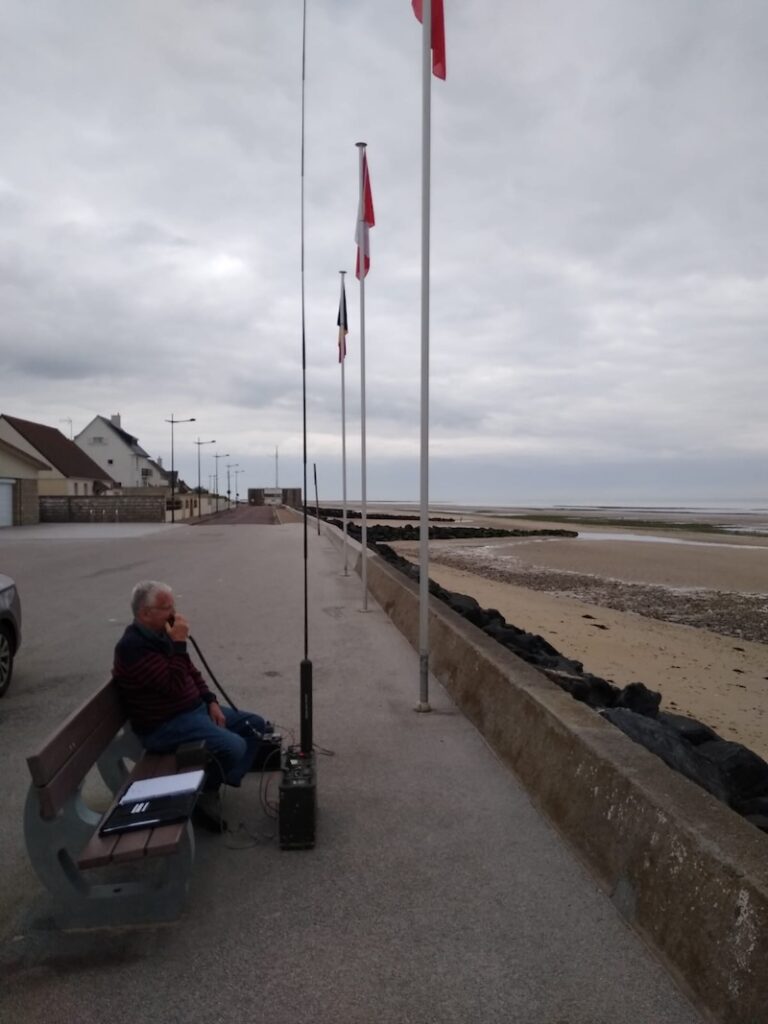
Collins PRC-47
The Collins AN/PRC-47 is a high-frequency single-sideband manpack transceiver built by the Collins Radio Company in the early 1960s and adopted as a standard long-range radio of the Vietnam War. Its radio set, the RT-671/PRC-47, covered 2.0–11.999 MHz and could be set to any of 10,000 synthesised channels spaced every 1 kHz, working in upper-sideband voice, CW (Morse) and FSK teletype (RATT). Unusually powerful for a man-portable set, it delivered 100 watts PEP on high power (or 20 watts on low), giving reliable beyond-line-of-sight communication where VHF could not reach — which is why, of more than 200 SSB radios trialled in Vietnam, the PRC-47 was one of the very few accepted into standard service, chiefly with the US Marine Corps (and also the US Army and Air Force). It could run from a 24-volt battery or vehicle supply, or from a 115 V 400 Hz source, but its capability came at a price: it was a substantial “two-man team pack” rather than a light single-soldier radio. This is a solid Collins design of its era.
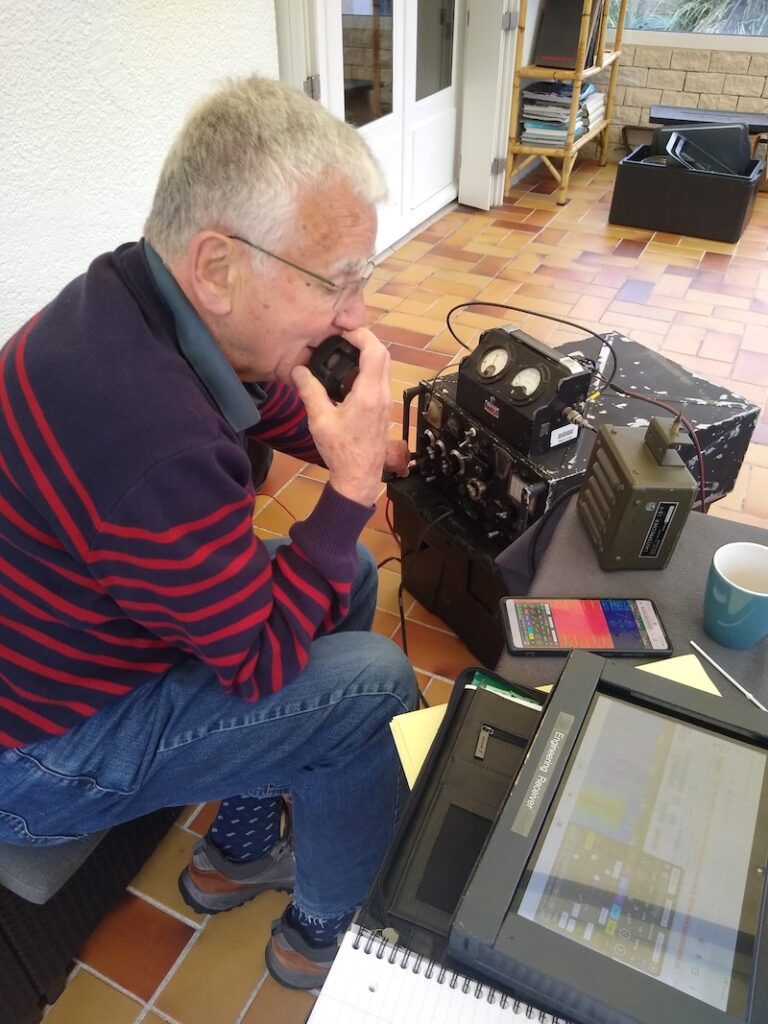
Collins ARC-2
The Collins AN/ARC-2 was an early post-war airborne high-frequency transceiver, one of the Collins Radio Company’s first-generation aircraft HF sets and a forerunner of the long line of Collins airborne radios that later produced the famous 618 series. Designed for long-range communication from aircraft, it covered the 2–9 MHz HF band in AM and CW modes, delivering around 30 to 40 watts of output with a receiver sensitivity of about 1 µV. Tuning was done by a continuously variable varicoil mechanism, and the set was powered from the aircraft’s 28-volt DC system through a dynamotor. At roughly 60 pounds, it was a substantial piece of equipment built to rugged service standards, using the valve (tube) technology of its day. As an example of Collins’ early airborne HF engineering — the heritage that led directly to the 618S and 618T.
Members equipment and special QSO
Members joined the Nets using Wireless Set 19, Collins 618T, Collins TCS-12, Collins ARC-2, Marconi T1509, T1154, Wireless 53, Wireless 62, Clansman 320, Labgear LG300, Clansman 320 including many other sets.
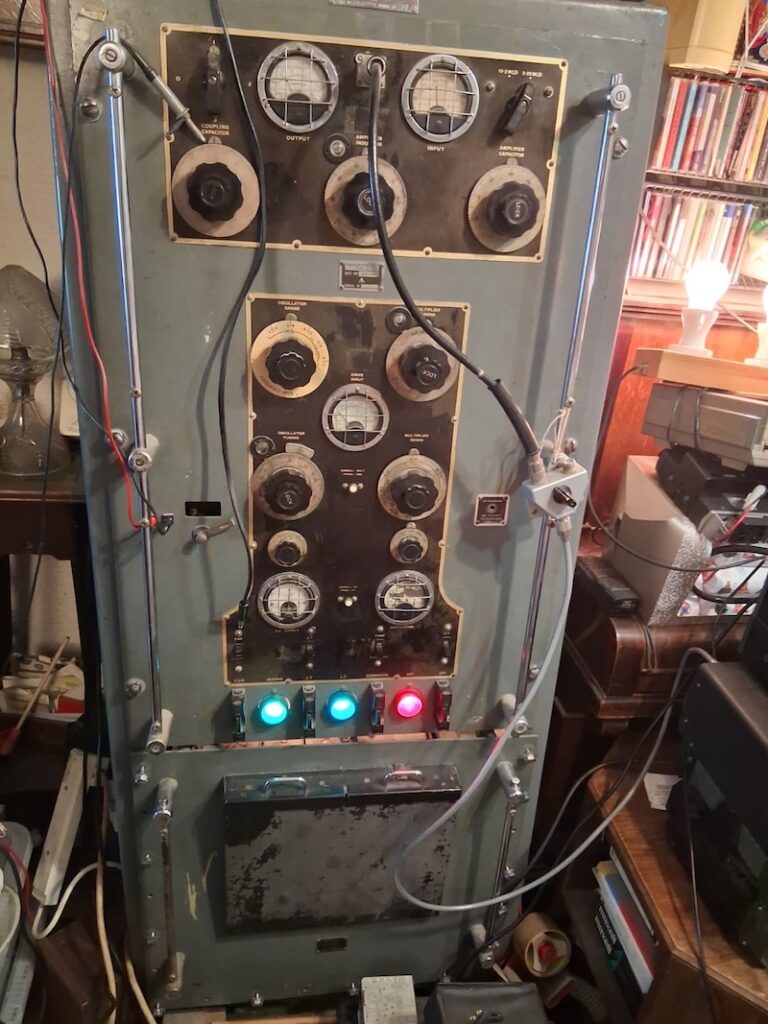
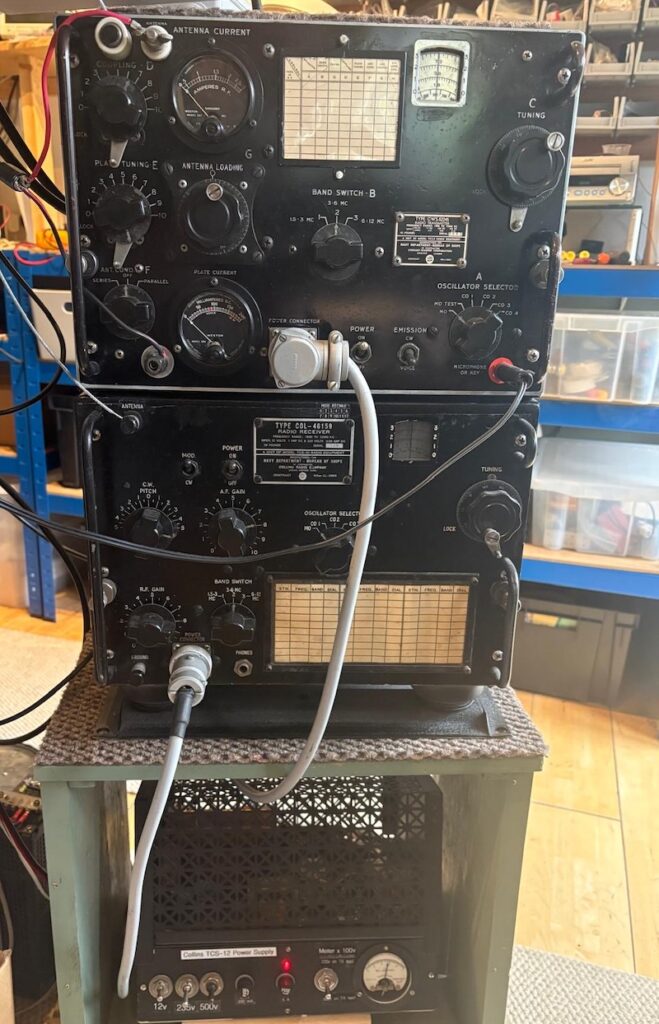
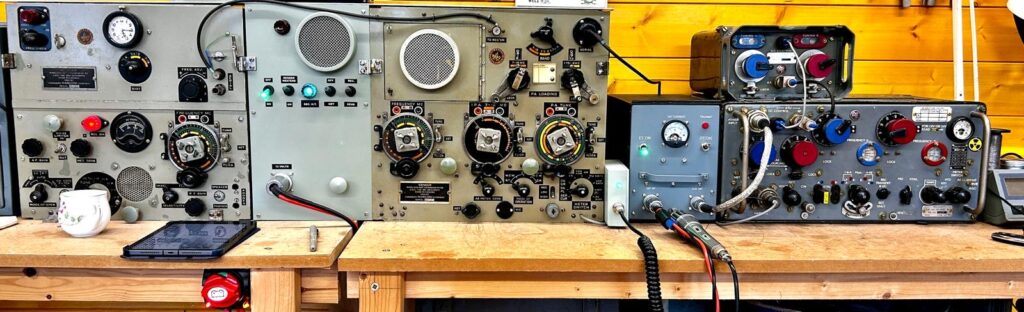
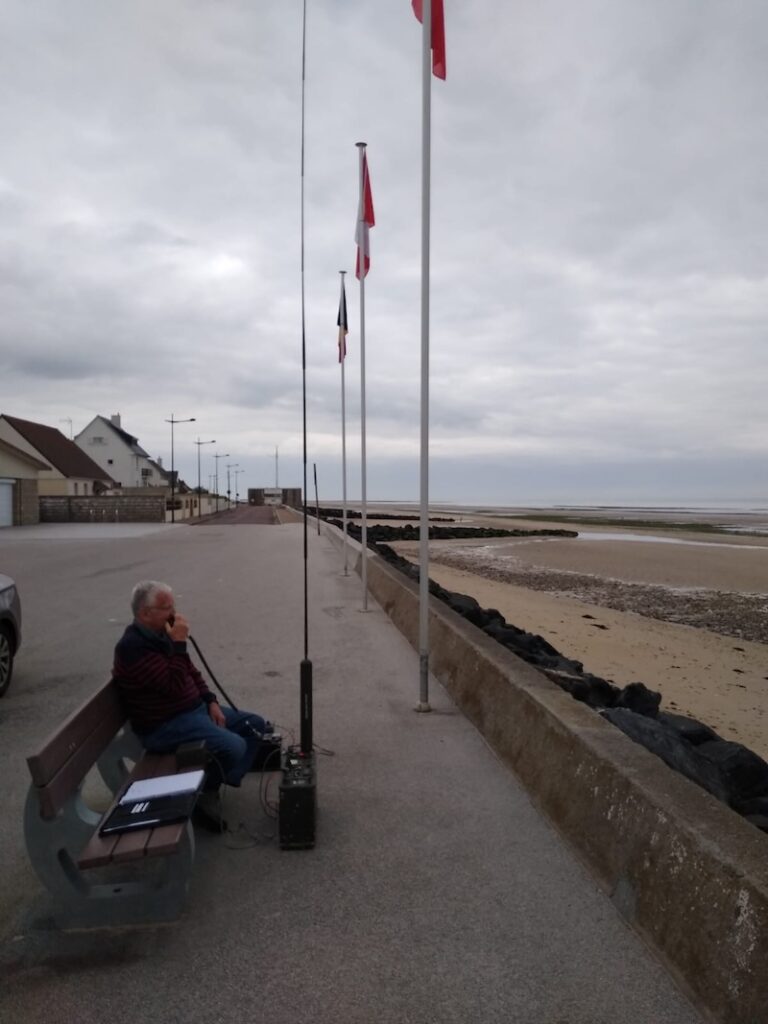
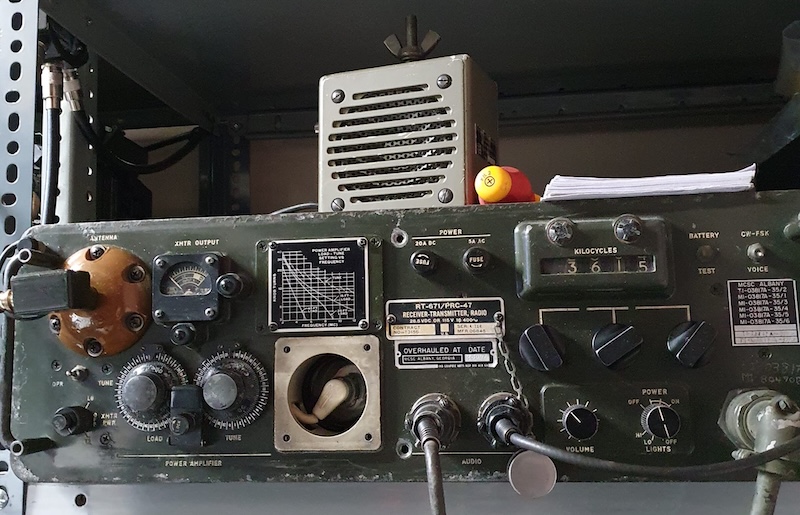
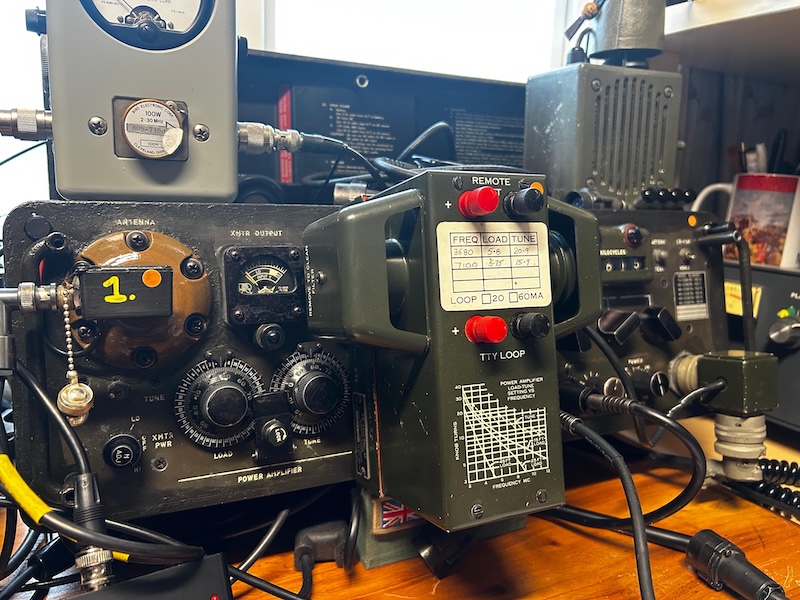
Trevor, PA3BOH; Ray, G6RAY; and Glyn, M3ZLA; joining the QSO using their PRC-47.
D-Day 82 Conclusion
Our heartfelt thanks go to the expedition team, whose hard work made the whole event possible — from the careful planning and preparation in the months beforehand, to transporting and setting up the equipment at each site, running the nets day after day, and taking the time to share the photographs and videos that have let everyone follow the activity and relive it afterwards. None of it happens by itself, and the dedication that went into getting the stations on air across Normandy is deeply appreciated.
Equally, our thanks go to all the members who joined the nets — without you there would simply have been no contacts to make, and it is your participation that turned a collection of stations into the great radio nets we enjoyed throughout the week. To everyone who took part, in Normandy or back home, on the key or the microphone or simply listening in: thank you. Above all, we remember why we were there. Commemorating D-Day is a profoundly important act of remembrance — a chance to honour those who fell so that others might live in freedom, and to keep their memory, and the spirit of those days in June 1944, alive for the generations to come.
Thierry, M1DRT, VMARS Web Editor.
Further reading
- How the Army handled D-Day communications (Radio World) — a detailed account of the Allied signals and communications infrastructure behind the Normandy landings, covering HF nets, liaison radio, and the extraordinary logistical challenge of coordinating communications across sea, air, and land on and after 6 June 1944.